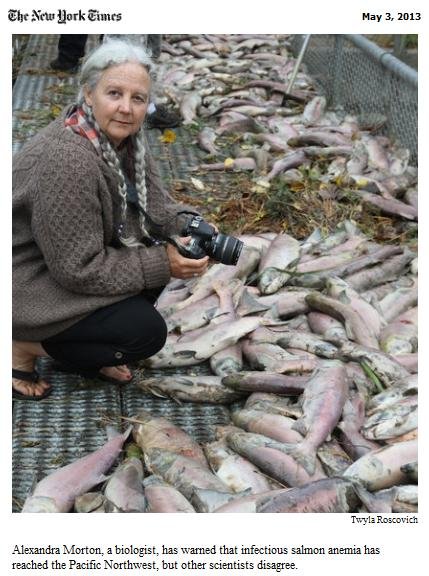
The New York Times (3 May) cranked up the volume in the debate whether the deadly virus Infectious Salmon Anaemia (ISA) has been let loose in the Pacific by Norwegian-owned companies farming disease-ridden Atlantic salmon.
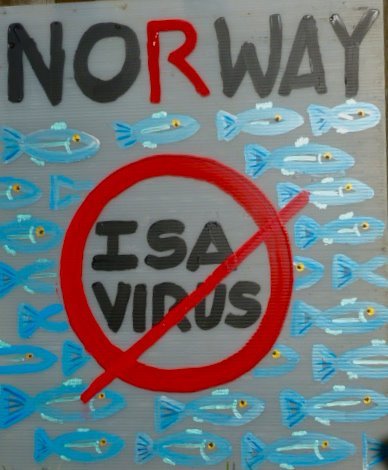
Read a background report – "ISA: Diary of Disease Disaster" – detailing the global spread of ISA since first being reported in Norway in 1984: online here
Read more about infectious diseases afflicting salmon farms worldwide
via "Fish Farmageddon: The Infectious Salmon Aquacalypse" (August 2011)
- online here
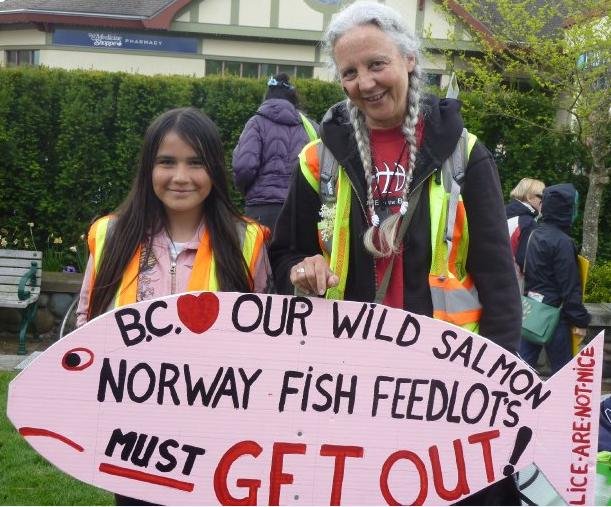
Following up the New York Times story, CBC News broadcast an interview yesterday afternoon (3 May) with Alexandra Morton and the Canadian Food Inspection Agency (CFIA) – listen online here!
"If we have any suspicion we would go and do testing," claimed the CFIA's Dr. Penny Greenwood. "Do we require them to regularly give us samples to test? Not at the moment"
"Our wild salmon are at risk from this," said Alexandra Morton. "The salmon farming industry is at risk from this and the CFIA should be re-testing these fish."
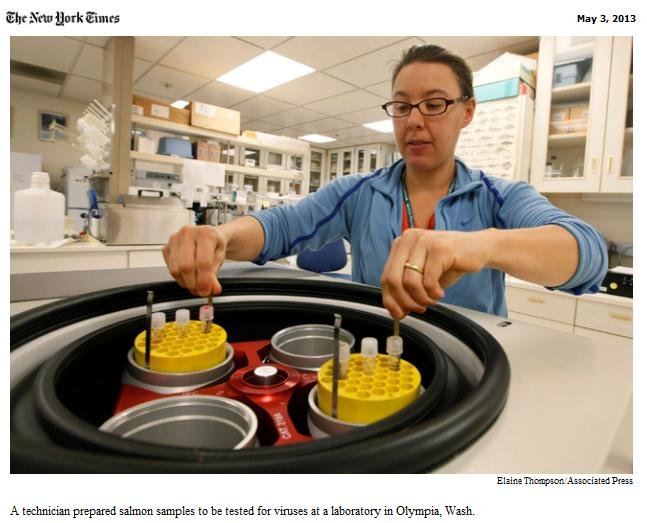
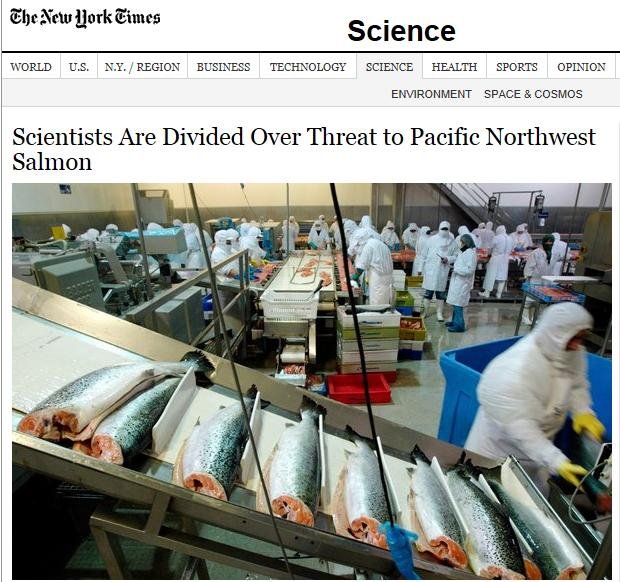
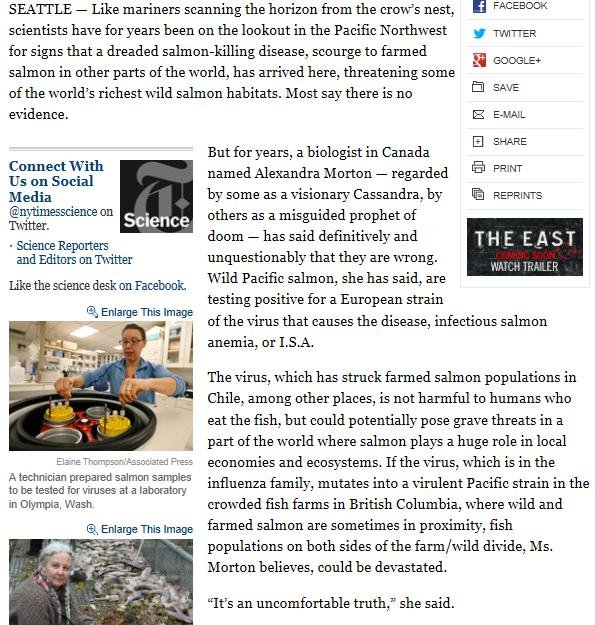
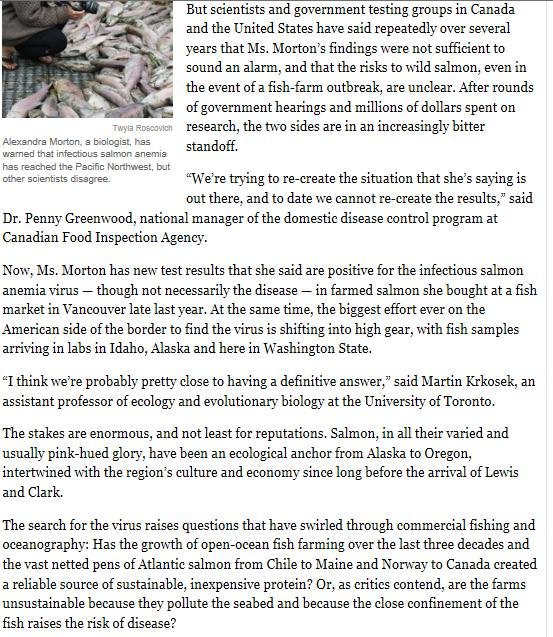
Despite positive tests for ISA in BC farmed and wild salmon the Canadian Food Inspection Agency (CFIA) and their fishy friends in the Norwegian-owned salmon farming industry continue to deny the presence of ISA in the Pacific North-West.
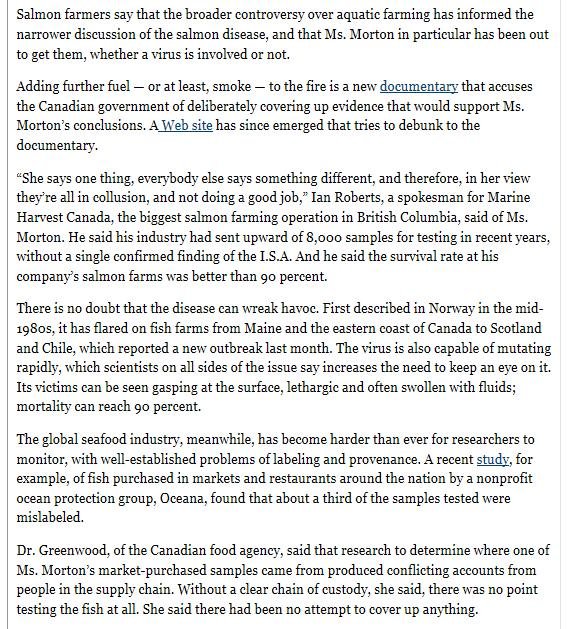
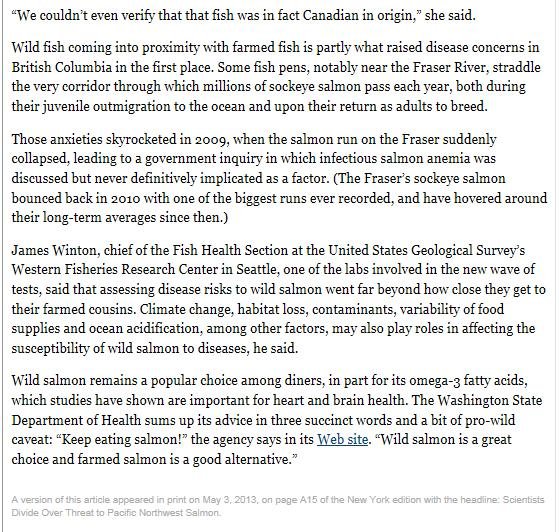
Read the New York Times article in full online here
For more details watch the documentary 'Salmon Confidential' – online here!
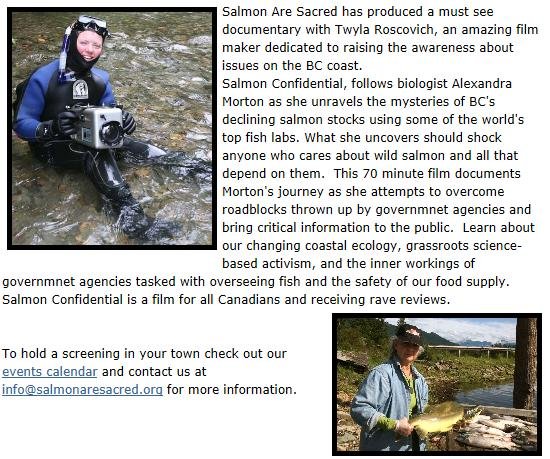
Read more on the Canadian cover-up of ISA in BC online via "FishyLeaks"
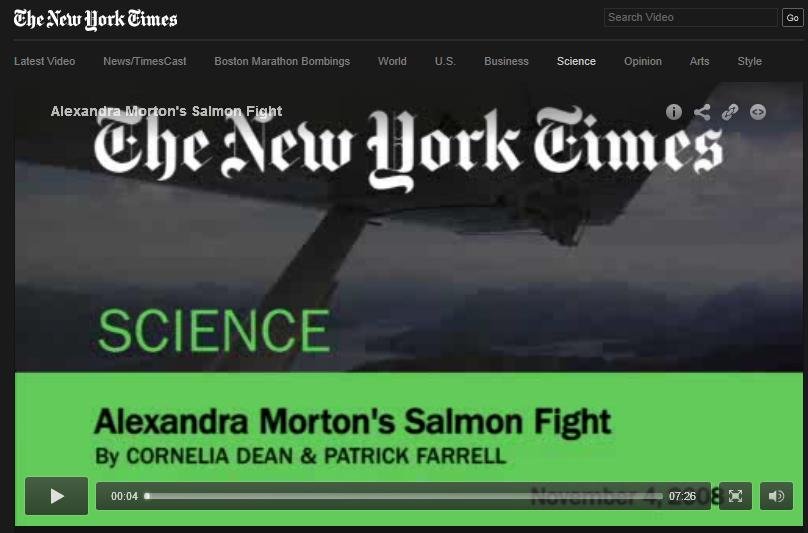
In 2008, The New York Times featured a video on "Alexandra Morton's Salmon Fight" – watch online here
Read the New York Times news story "Scientist at Work: Alexandra Morton"
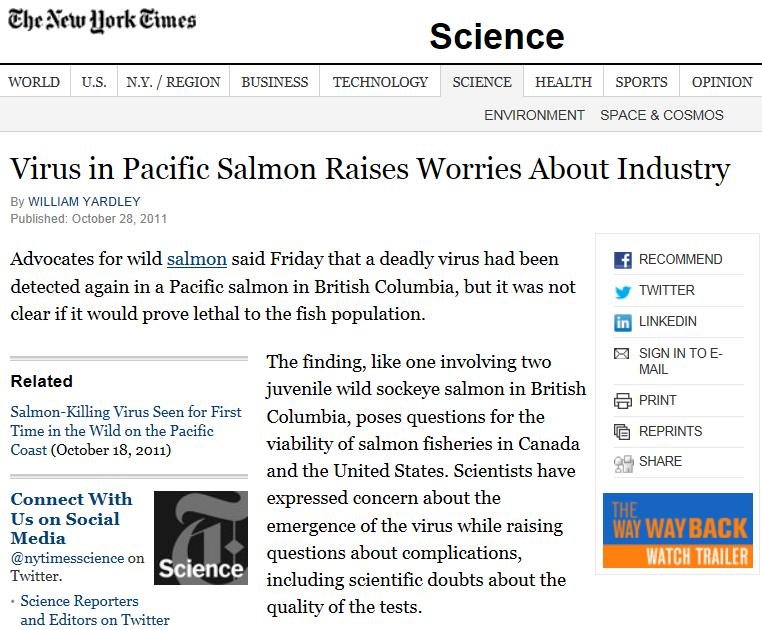
The New York Times reported in 2011:
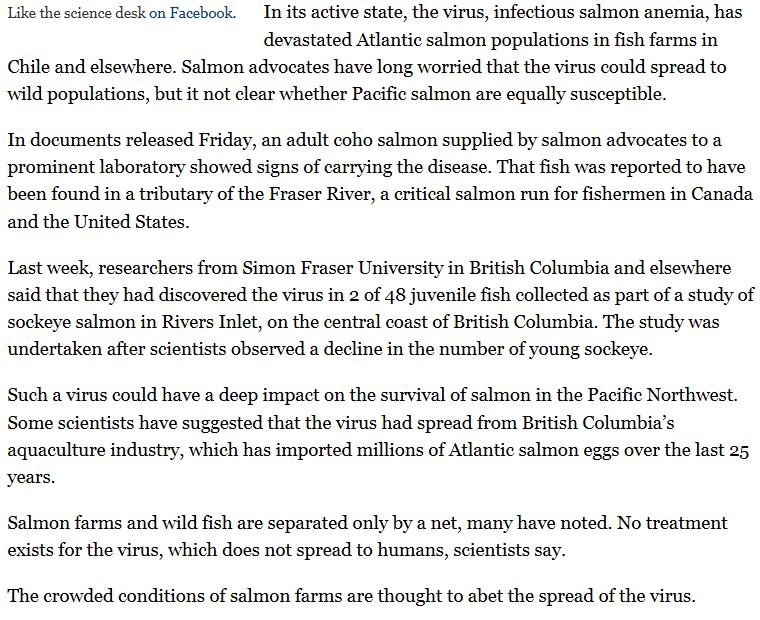
Another article published by The New York Times in 2011 reported:
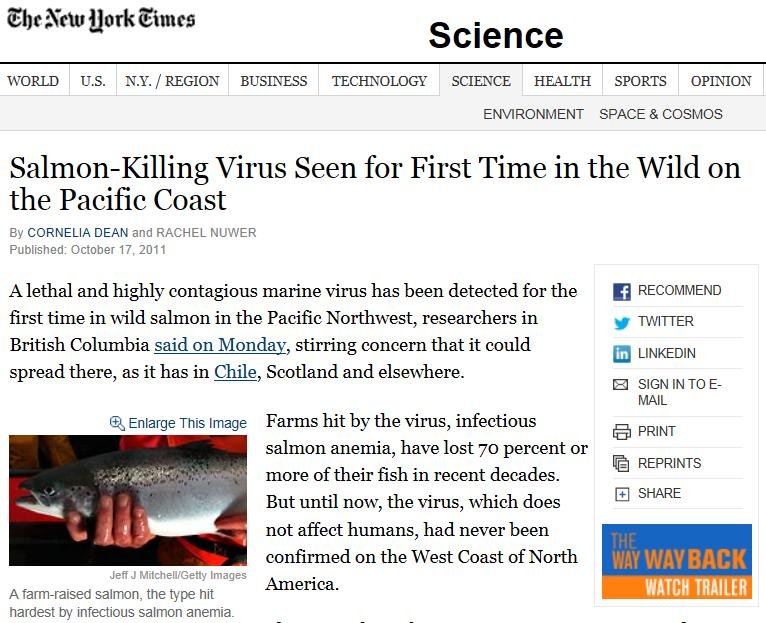
Another blog in The New York Times published in 2011 asked:
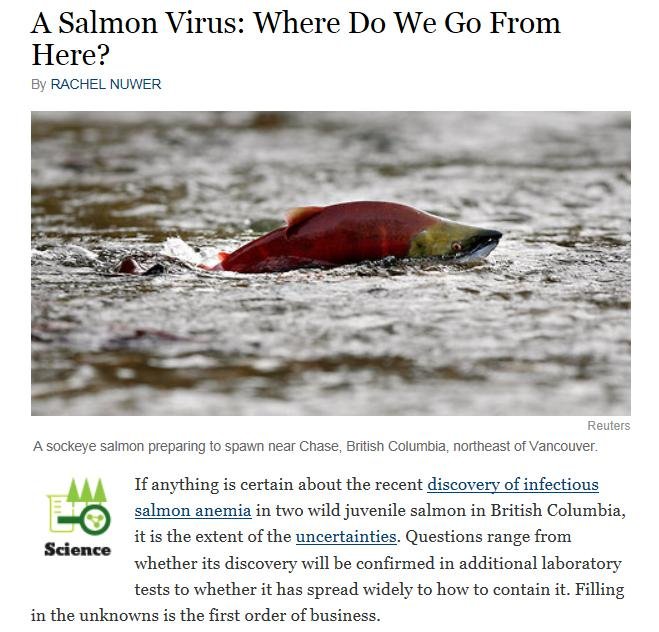
The article concluded:
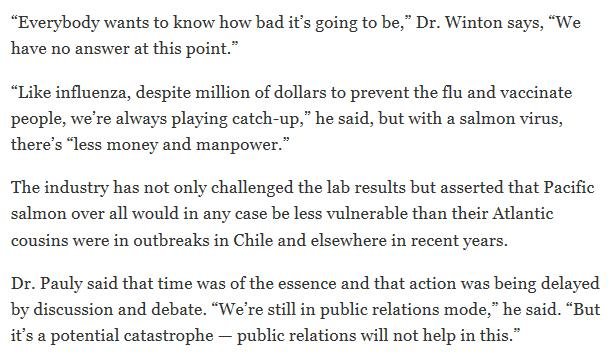
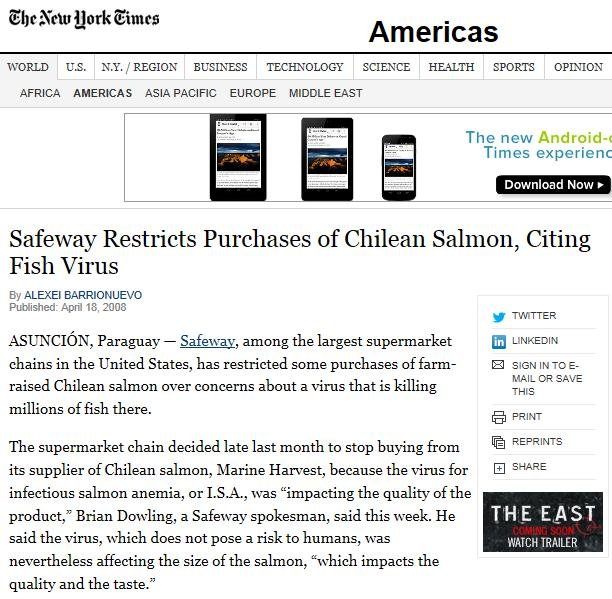
The multi-billion dollar question here is the impact on the farmed salmon market when – not if – ISA is officially reported by Canada to the World Organization for Animal Health (OIE). The ISA crisis in Chile cost over $20 billion and resulted in a backlash from supermarkets in the United States. The New York Times reported in 2008:
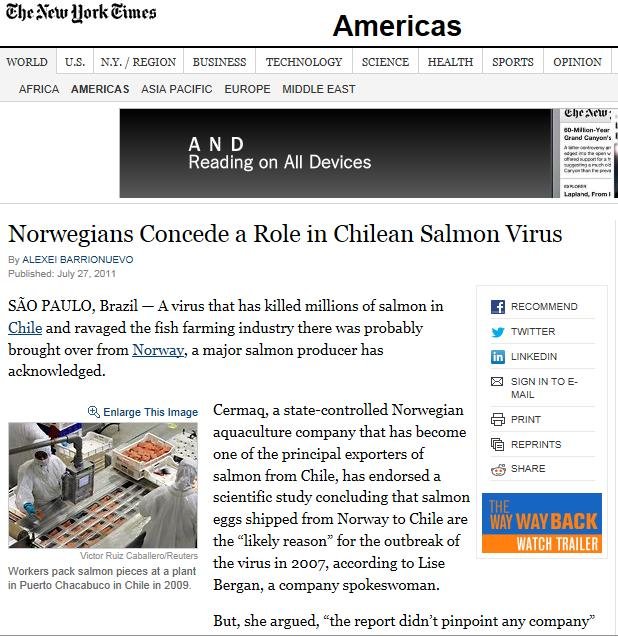
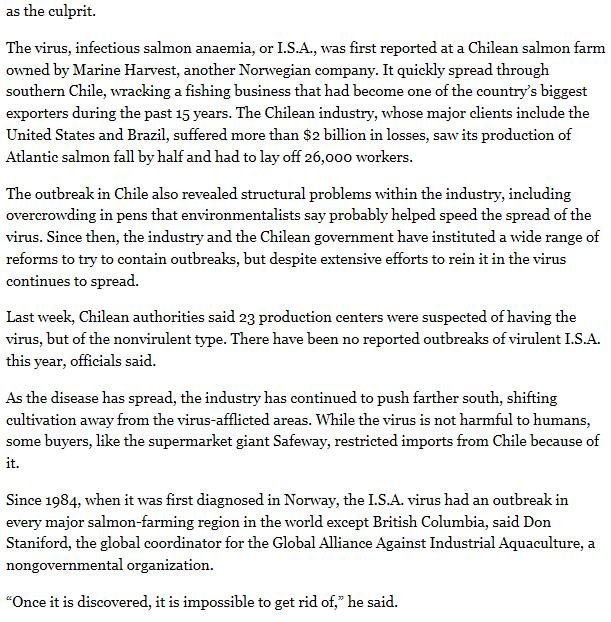
Earlier this week (29 April) it was revealed that a virus was affecting the operations of a closed containment salmon farm near Port McNeill – the land-based facility sourced smolts from Norwegian giant Marine Harvest. In 2011, the New York Times also reported
how the ISA virus had been imported into Chile by the Norwegian egg
company Aquagen – then part-owned by Marine Harvest and Cermaq.
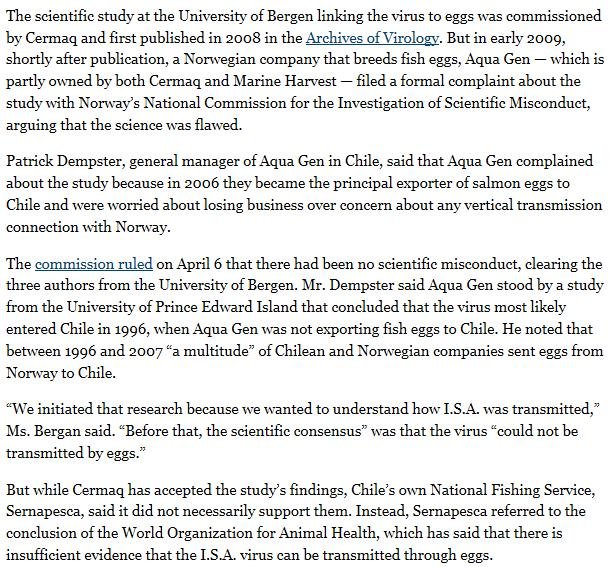
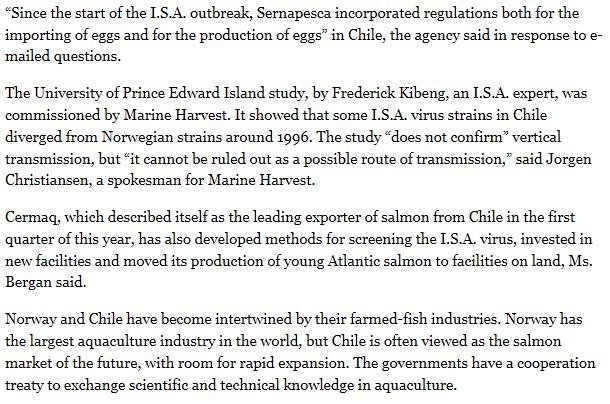
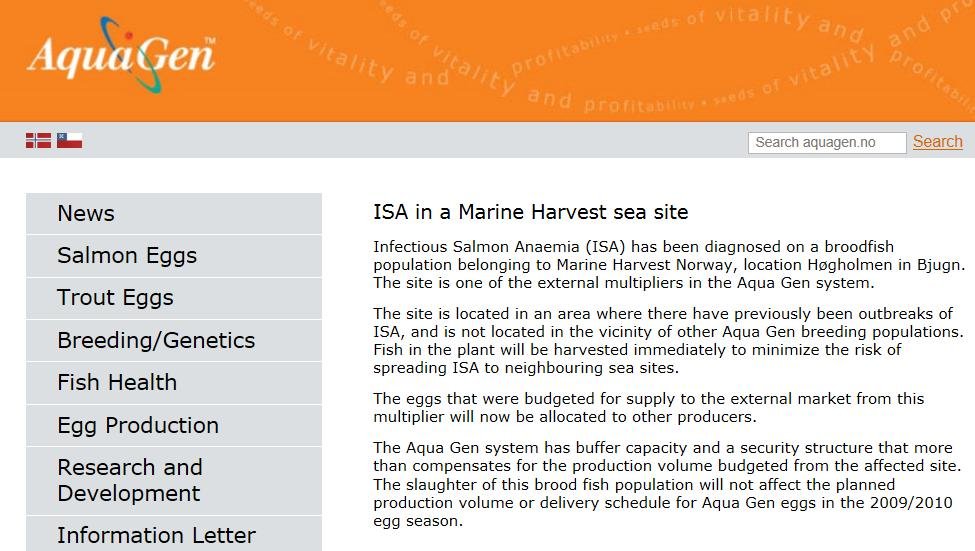
In January 2013, Marine Harvest sold all their shares in Aquagen but not before spreading ISA in their Norwegian operations at Høgholmen in Bjugn.
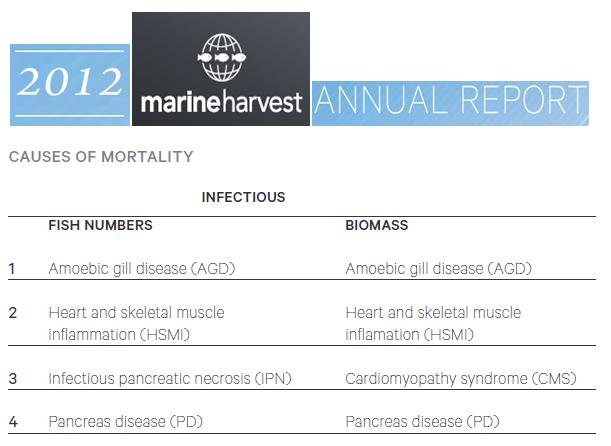
Marine Harvest is known to be infected around the world with various
viruses including Infectious Salmon Anaemia, Heart & Skeletal Muscle
Inflammation/Piscine Reovirus, Pancreas Disease/Salmonid Alphavirus and
Amoebic Gill Disease.
In fact, Marine Harvest's 2012 Annual Report published just last week (26 April) named the biggest killers affecting their operations:
Last month, Alexandra Morton wrote to Marine Harvest Canada warning them of the spread of Piscine reovirus:
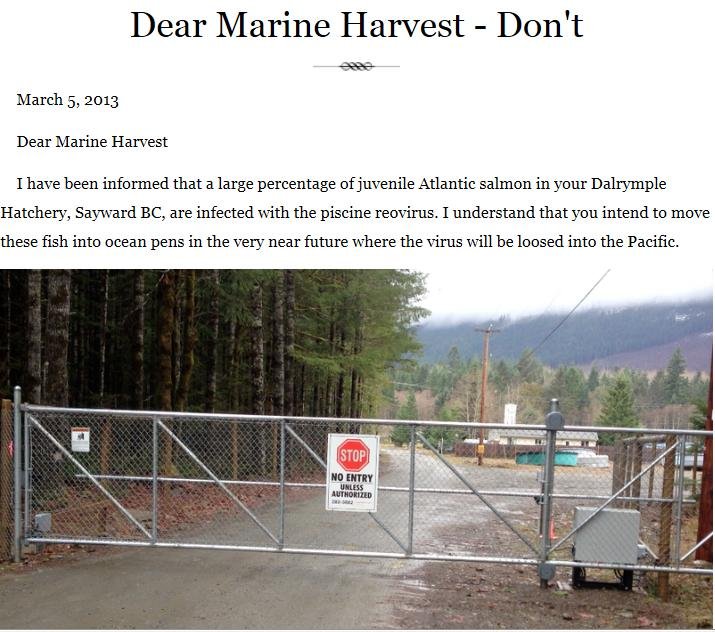
"Your fish in the Dalrymple Hatchery represent a significant threat
to the wild salmon of British Columbia if they are placed in ocean net
pens," wrote Alexandra Morton. Even in closed containment facilities
the threat of a deadly virus spreading is very real.
Last year, Alexandra Morton also asked Marine Harvest:
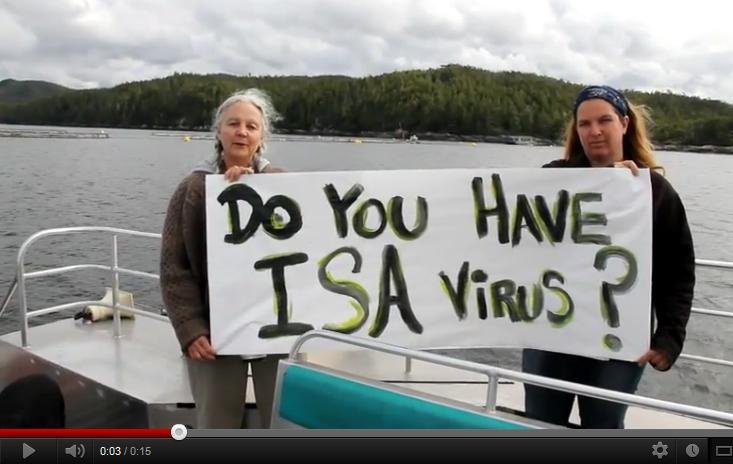
Read more via Virus Alert at 'Cracked' Closed Containment Farm!
The message to the disease-ridden Norwegian corporations operating in British Columbia is crystal clear:
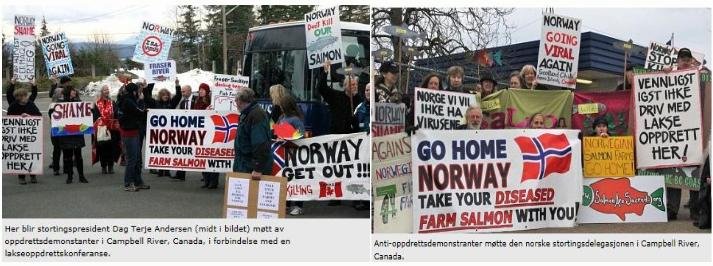

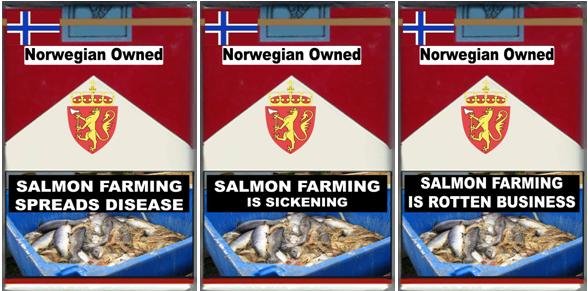
Read more via 'Something Is Rotten In The State of Norway'