Mainstream Canada, a
subsidiary of the Norwegian Government-owned multinational Cermaq, could become embroiled in further legal action in British Columbia following the approval of their Plover Point farm in the Clayoquot Sound UNESCO Biosphere Reserve.
"We will
not allow governments and industry to run roughshod over our rights to clean water
and sustainable fisheries," said Terry
Dorward, Tla-o-qui-aht Elected Councilor, in a press release (15 October). "We are investigating legal options and will not rule
out direct actions to stop Mainstream Canada’s Plover Point fish farm."
The press release is enclosed in full below:
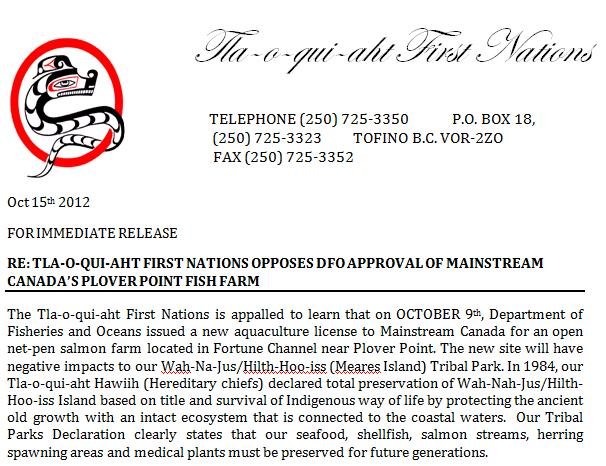
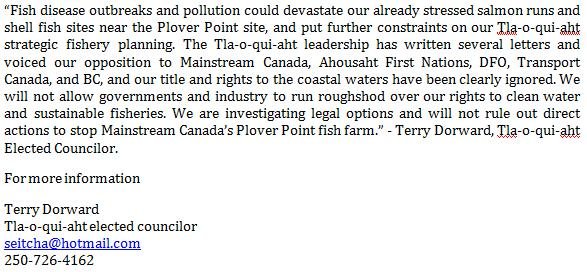
Download the press release in full online here
In January 2012, Terry Dorward was interviewed by Norwegian TV.
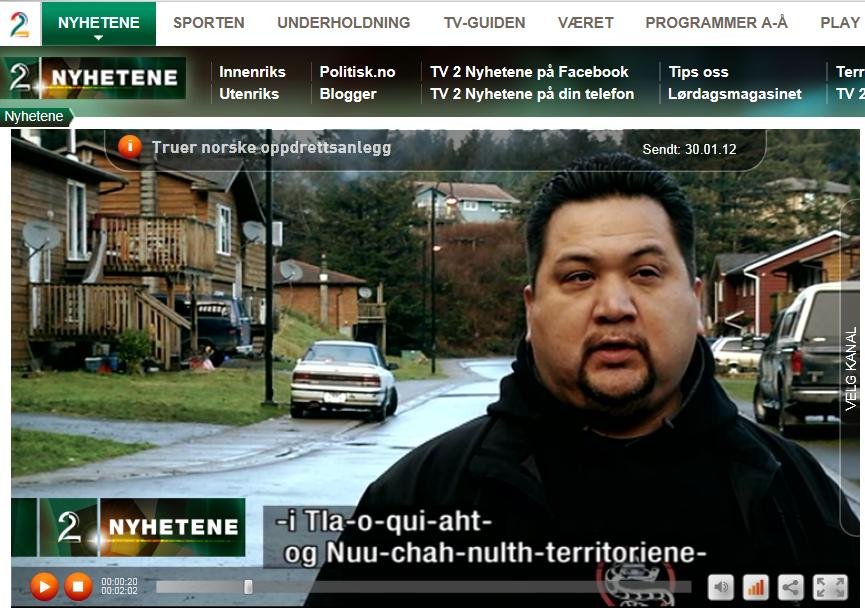
"We've been concerned about the impacts of salmon farming in Tla-o-qui-aht and Nuu-chah-nulth territory and the impacts it has on our coastal communities," said Dorward. "The impacts of fish farms, the sea lice, the infectious diseases – we felt enough was enough. If the governments are not going to do it, then I believe the people will. The people will stand up. People will shut these farms down. It's that much of an important issue that people will go and fill up those jails."
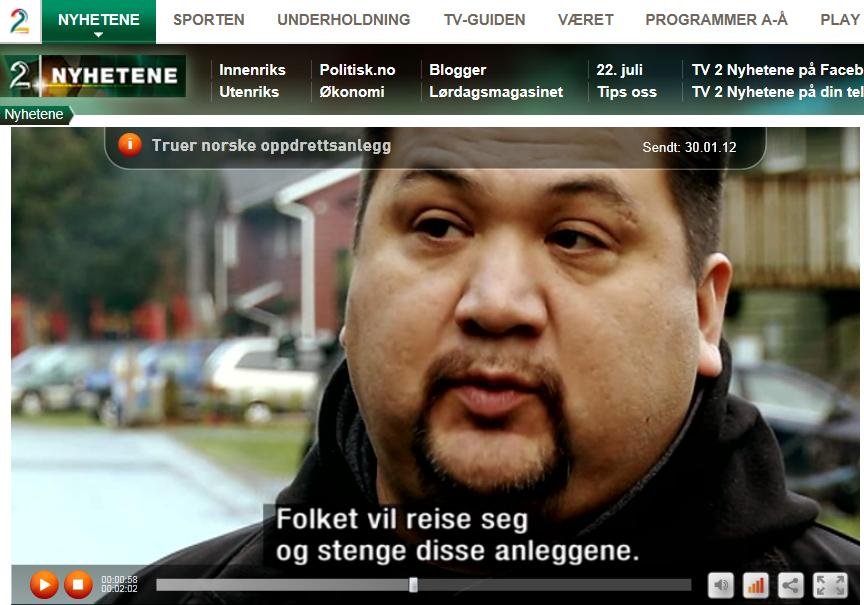
"The next level in my view, if the governmentand industry doesn't listen, is we have to shut those farms down" continued Dorward.
Watch TV2's news report online here
For more background read "Norway's TV 2 Lands in Vancouver: Mainstream/Cermaq SLAPP Suit Goes International"
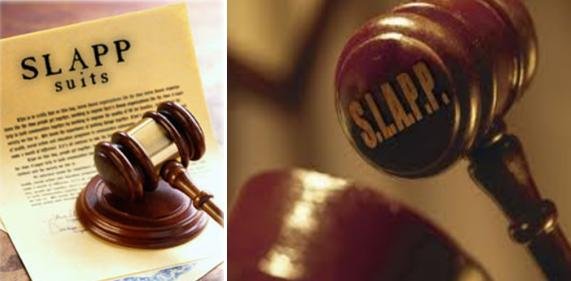
Read more details on Cermaq's legal battle in the Canadian courts via “Cermaq
Dig Deeper Hole by Appealing Lawsuit Loss”
Following the approval of Cermaq's Plover Point salmon farm in the Clayoquot Sound UNESCO Biosphere Reserve, the Coastal Alliance for Aquaculture Reform and Friends of Clayoquot Sound both lambasted the government.
“DFO calls this new licence a ‘replacement’ for another site that has been inactive for 47 out of the last 51 months,” said David Lane, Executive Director of the T. Buck Suzuki Environmental Foundation in a press release (12 October). “Replacing a poorly producing site with a site able to greatly expand production of Atlantic salmon in open net-pens along the Bedwell Sound and Fortune Channel corridor is a recipe for disaster for wild salmon.”
“We are hugely disappointed that DFO took this decision at this time,” said Kelly Roebuck from Living Oceans Society. “The Cohen Report is due out in less than a month and the recommendations from that report may have an impact on salmon farming everywhere in B.C., not just along the migration routes of Fraser River sockeye."
“The UNESCO Biosphere Reserve designation in Clayoquot Sound makes it the perfect proving ground for raising salmon in closed containment technology,” said John Werring, Senior Science and Policy Advisor for the David Suzuki Foundation. “The intent of the designation is to explore new ways to create employment that have less harmful environmental impacts and closed containment has huge potential to do just that by eliminating any interaction between the farmed salmon and their surrounding marine environment.”
"The Plover Point salmon farm site should never have been approved in advance of the Cohen Commission report and recommendations, which will likely bring in new measures to curb the expansion of salmon farming on the B.C. coast," said Bonny Glambeck from Friends of Clayoquot Sound in a press release (12 October).
Friends of Clayoquot Sound also wrote to the Premier of British Columbia expressing "serious concerns" about the approval of Cermaq's new farm at Plover Point:
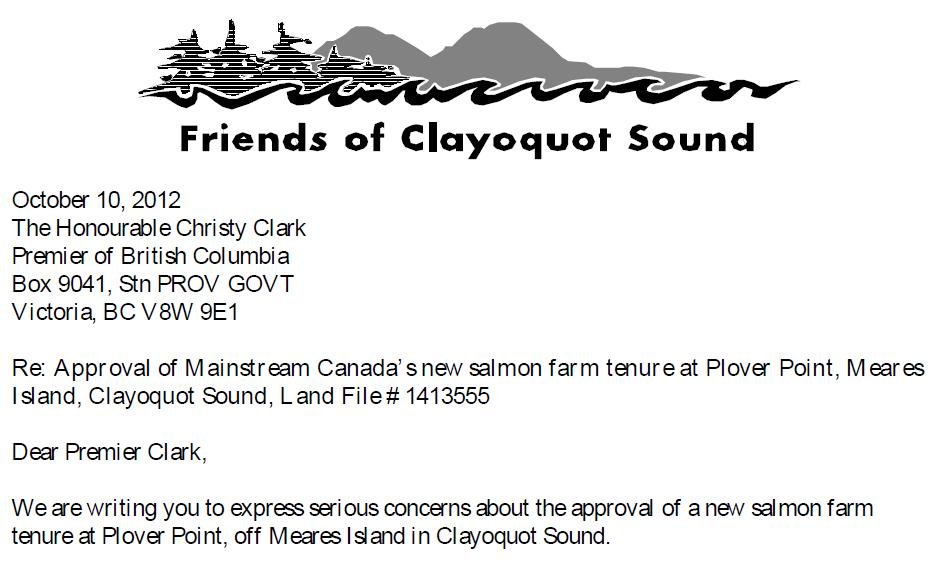
Read the letter to the Premier of British Columbia Christy Clark – in full online here
During last year's Cohen Commission it was revealed that Infectious Salmon Anaemia (ISA) and a piscine reovirus associated with Heart & Skeletal Muscle Inflammation was present in salmon farms in the Clayoquot Sound UNESCO Biosphere Reserve:
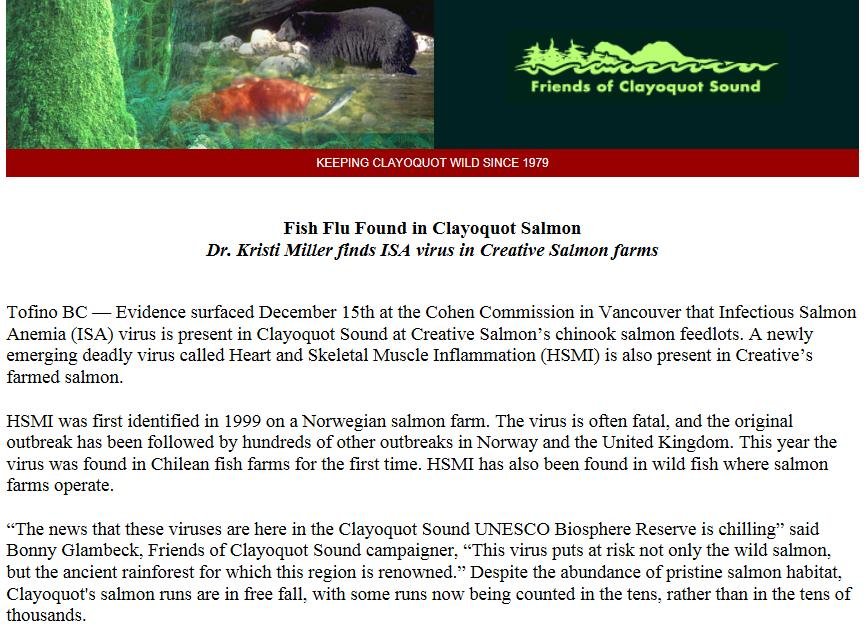
Read more via "Fish Flu Found in Clayoquot Salmon" and "Kristi Miller Steals Show Again as Salmon Inquiry Rocked by New Virus Bombshells"
Earlier this month (5 October), Cermaq reported to the Oslo Stock Exchange financial losses of $9 million due to infectious diseases in Clayoquot Sound and at home in Norway. Here's the report (5 October) in the Norwegian trade publication Intrafish:
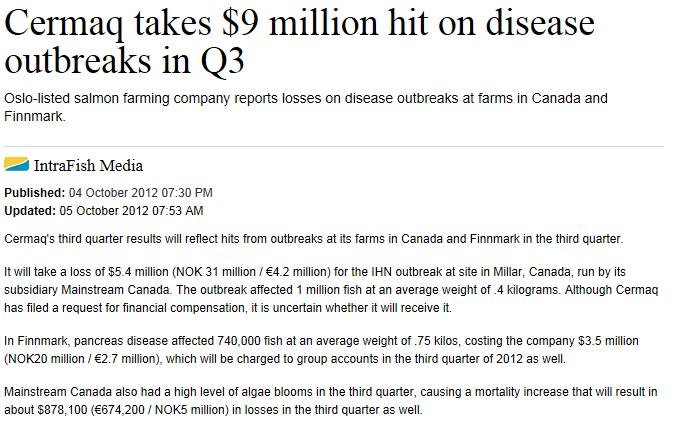
Cermaq is now seeking financial compensation for the spread of infectious diseases in the Clayoquot Sound UNESCO Biosphere Reserve. However, a public backlash is building.
"How’s this for a business model: You bring together thousands of fish, stick them in an open net in the ocean, despite warnings that the conditions invite infectious disease, and then, when they all get sick, you receive compensation from the Canadian taxpayer," wrote Andrew Gage at West Coast Environmental Law (14 August).
"So why would fish farm companies be able to claim compensation for losses through disease?" continued Gage. "Even if you buy their line that these diseases were spread from wild fish (the Friends of Clayoquot Sound have data that suggests otherwise), these companies, and not the Canadian taxpayer, made the choice to have Atlantic salmon in open net farms in waters infested by wild salmon with their yucky diseases, and apparently made the choice not to vaccinate them against those diseases."
"A bailout for these losses would mean that they don’t even have to pay for losses that come with open net salmon farming, and as such represents a direct subsidy to what many, including West Coast Environmental Law, believe to be an unsustainable industry," concluded Gage. "These are very large companies, with private insurers. They can afford to pay for the costs of their own choices. We believe that the law should ensure that fish farm companies are responsible for the real costs of their operations. Bailing out these companies would definitely be a step in the wrong direction."
Read more via "Will your tax dollars subsidize BC’s unsustainable fish farms?" and "Compensation Culture"