Neonicotinoid Imidacloprid Dogged by Lawsuits, Bans & Deaths – Is Benchmark's BMK08 in the doghouse or will it be unleashed? https://t.co/YFrjjN4Dl4@WeAreBenchmark @Bayer @Elanco @Elanco4Pets @ElancoEurope @DaveGoulson @roseofgoodhope @CenterForBioDiv @FerdOwner @LoriAnnBurd pic.twitter.com/fYRj3gwVfh
— Don Staniford (@TheGAAIA) June 29, 2021
Norwegian-owned Benchmark may be getting that itchy feeling as study after study reveals the lethal nature of their 'secret' neonicotinoid weapon to kill lice (Scottish Salmon Watch revealed in March 2020 that BMK08 – previously marketed as Ectosan – was the banned neonicotinoid Imidacloprid). Investors should heed the warning bells from scientists as well as legal action on the banned neonicotinoid dubbed 'Novichok for insects' by Professor Dave Goulson of the University of Sussex.

"If you lie down with dogs, you get up with fleas", or in Latin, qui cum canibus concumbunt cum pulicibus surgent. According to Wikipedia, the phrase "he that lieth down with dogs shall rise up with fleas" has been attributed to Benjamin Franklin whilst the Latin has been unreliably attributed to Seneca. The phrase leaps to mind as Benchmark doggedly chases their tail lobbying regulators in Norway, Scotland, Chile and Canada to sanction the use of banned neonicotinoid Imidacloprid.
Anyone for Norwegian Salmon Marindaded in Banned Neonicotinoid Imidacloprid (don't worry it's ASC-approved)?! https://t.co/fn6TWu9qo4#BMK08 #Ectosan #D10AquaticBlast @WeAreBenchmark @FerdOwner @ASC_aqua
Is toxic Norwegian salmon reaching consumers? @seafoodnorway @REMA1000 pic.twitter.com/BpytMop4U2— Don Staniford (@TheGAAIA) June 17, 2021
The Center for Biological Diversity reported in April 2021 that pet collars containing Imidacloprid are subject to a legal petition in the United States following the deaths of nearly 1,700 pets:
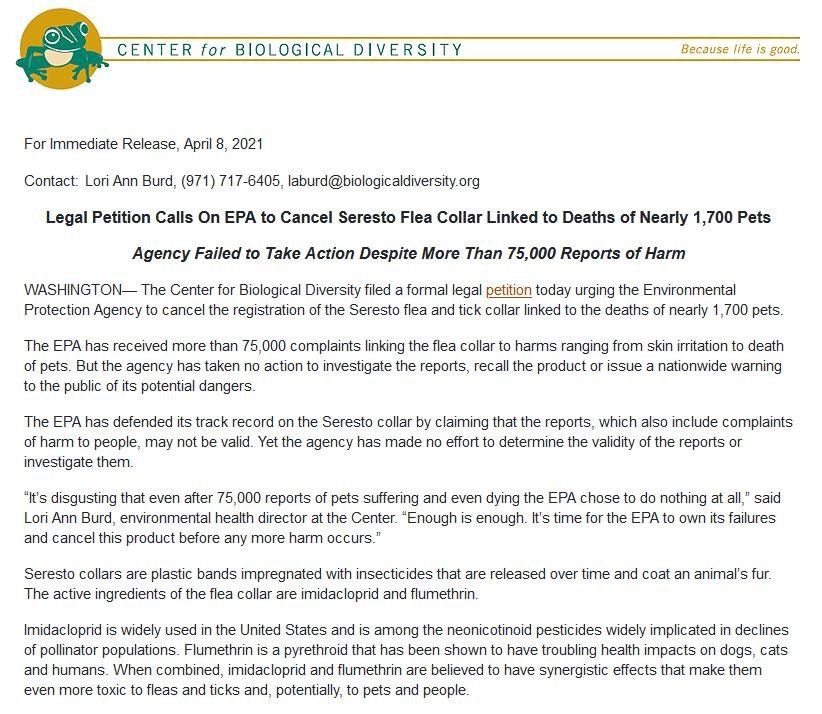

Breaking: we just petitioned EPA to cancel its registration of Seresto flea collars. EPA ignored 75,000 incident reports, including 1700 reports of deaths resulting from the collar. Enough is enough. #RecallSerestoCollars https://t.co/Ih1GuRZFEb
— Lori Ann Burd (@LoriAnnBurd) April 8, 2021
USA Today reported (8 April 2021):
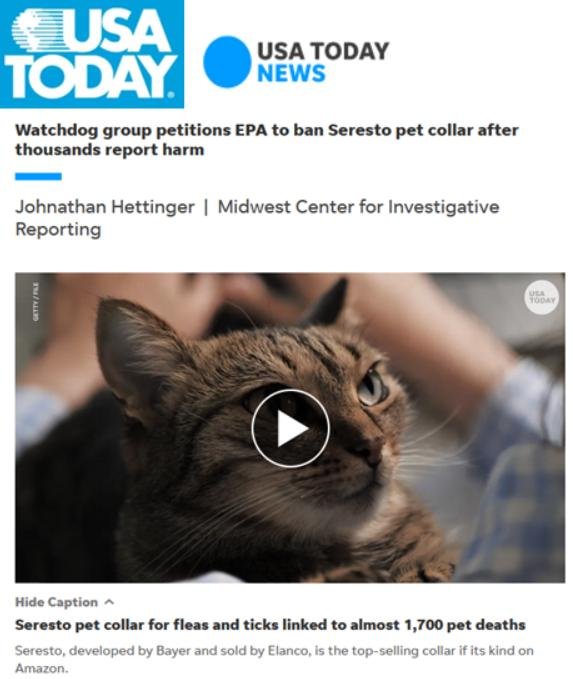
The article included:
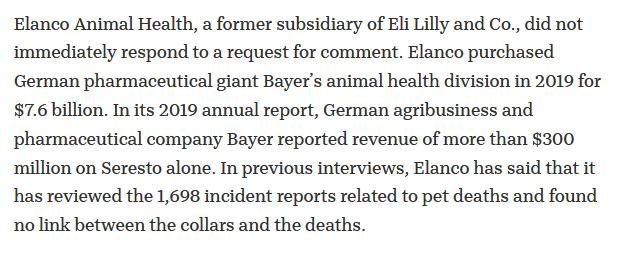
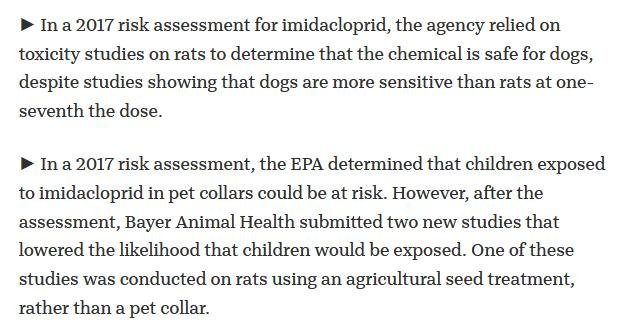
And:
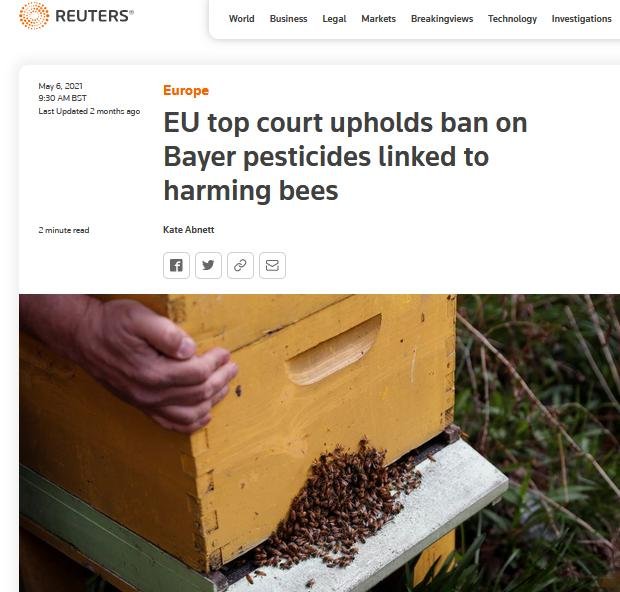
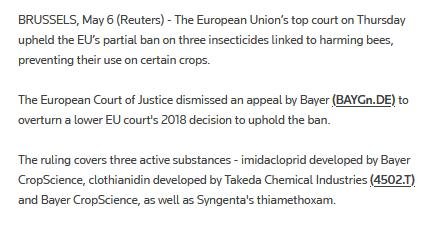
Reuters reported in May 2021 that Bayer's appeal on the EU ban on Imidacloprid had died a death in the courts.
Professor Dave Goulson of the University of Sussex – author of the forthcoming 'Silent Earth' – told The Guardian (27 May 2021):
"It’s like the wild west" said @DaveGoulson "These chemicals are incredibly poisonous – the novichok for insects. It takes a billionth of a gram to harm aquatic life, so even tiny traces would have major impacts on marine life" @guardian @WeAreBenchmark https://t.co/OzouYaXCEk
— Don Staniford (@TheGAAIA) May 27, 2021
It seems that Benchmark's plans to unleash 'Novichok for insects' on salmon farming could be a graveyard for investors as well as nature.

USA Today reported in March 2021:
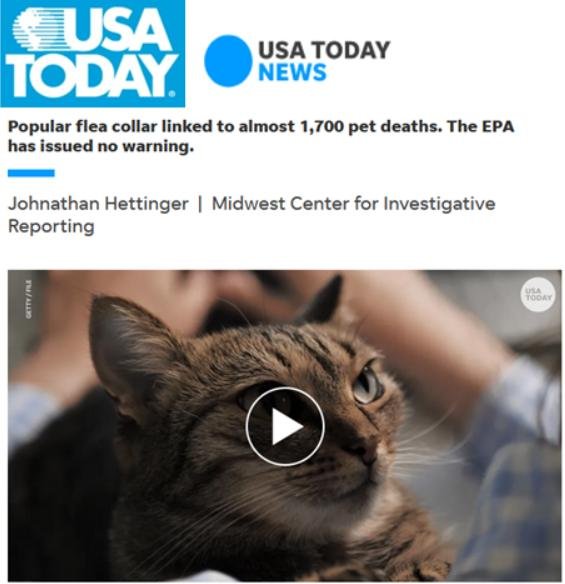
Seresto, one of the most popular flea and tick collars in the U.S., has been linked to hundreds of pet deaths, tens of thousands of injured animals and hundreds of harmed humans, EPA records show. https://t.co/ILx9FCk3Sh
— USA TODAY (@USATODAY) March 2, 2021
Just last week (24 June 2021), USA Today reported:
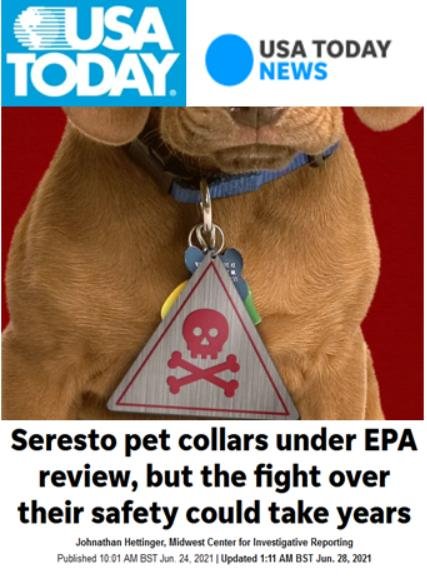
Any determination by the EPA about Seresto pet collars' safety is likely to take years – up to a decade or more – based on the agency’s history of foot dragging over complaints about other potentially dangerous pet products.https://t.co/XaErWkKysp
— USA TODAY (@USATODAY) June 24, 2021
Earlier this month (16 June 2021), financial news site Seeking Alpha reported on the "litigation risks" associated with Elanco's Imidacloprid-infused pet collars warning of a "growing public relations nightmare ahead".
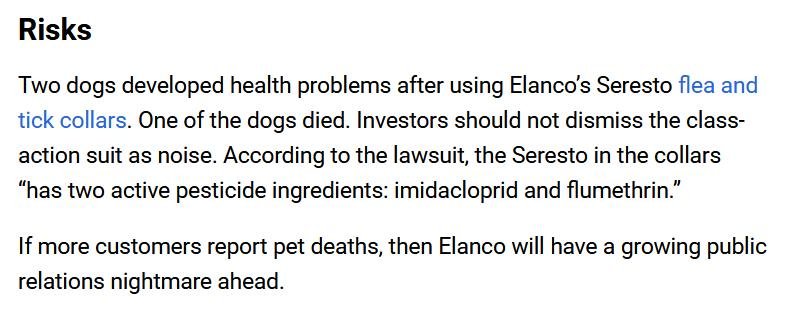
Investors in Benchmark would do well to heed the warning bells.
Editorial in British Wildlife: "Neonics in Salmon Farming – Alarm Bells Are Ringing" @britwildlife @DaveGoulson https://t.co/hn6DHZmS9D @FerdOwner @WeAreBenchmark @FergusEwingMSP @strathearnrose @salmonfarming1 @IntraFishNorge @thefishsite @nature_scot @MasumiYamamuro @scotgp pic.twitter.com/kcIrtdhB0I
— Don Staniford (@TheGAAIA) August 24, 2020
Jean-Marc Bonmatin, from the French National Centre for Scientific Research, was quoted @SundayTimesScot warning "the use of Imidacloprid as it is presented for salmon farming will be catastrophic for aquatic invertebrates, and even for fishes" @undercur https://t.co/1KJ21gpTn6
— Don Staniford (@TheGAAIA) June 15, 2020
Preliminary research shows that a popular insecticide hampers arthropods in the ocean.
https://t.co/lzDwp3WJva via @hakaimagazine— Don Staniford (@TheGAAIA) May 22, 2020
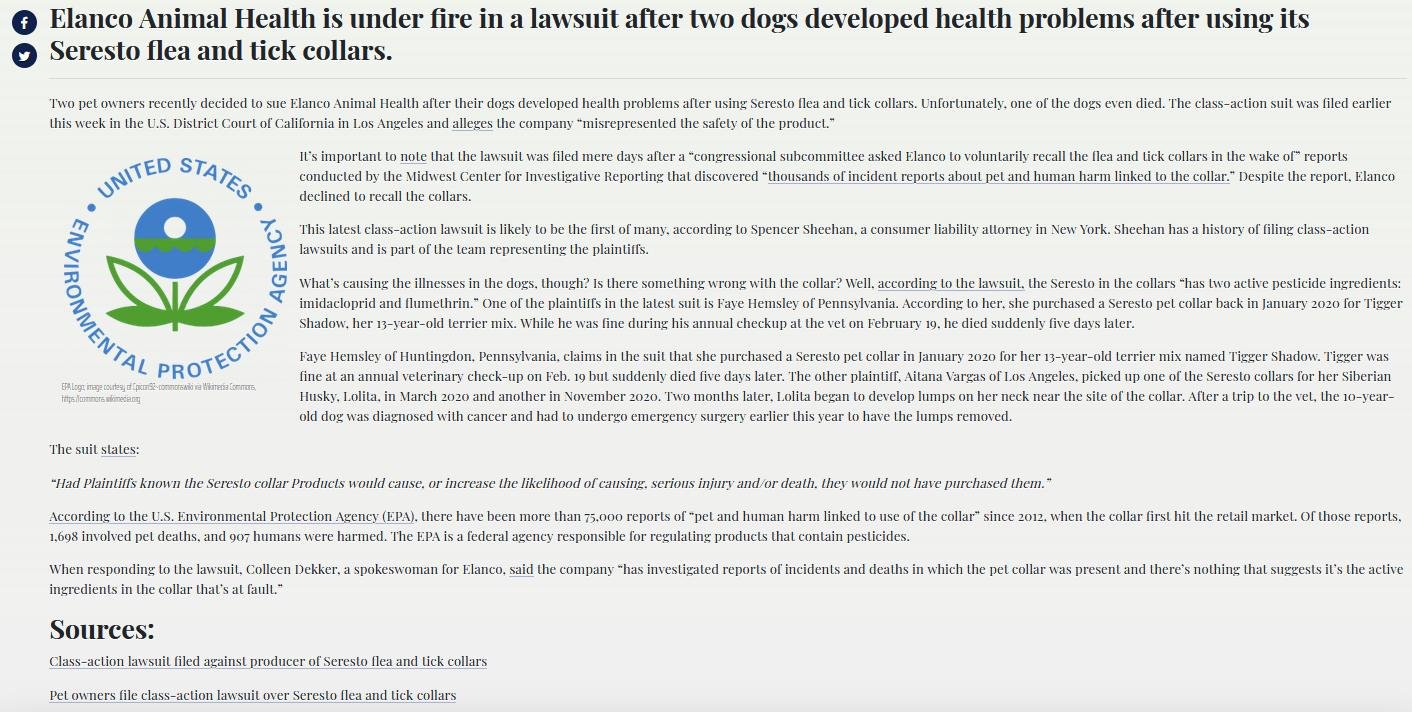
Legal Reader reported in April 2021:
The Ferret reported in May 2021 that the Scottish Government is paving the way for the use of Imidacloprid in salmon farming in Scotland.
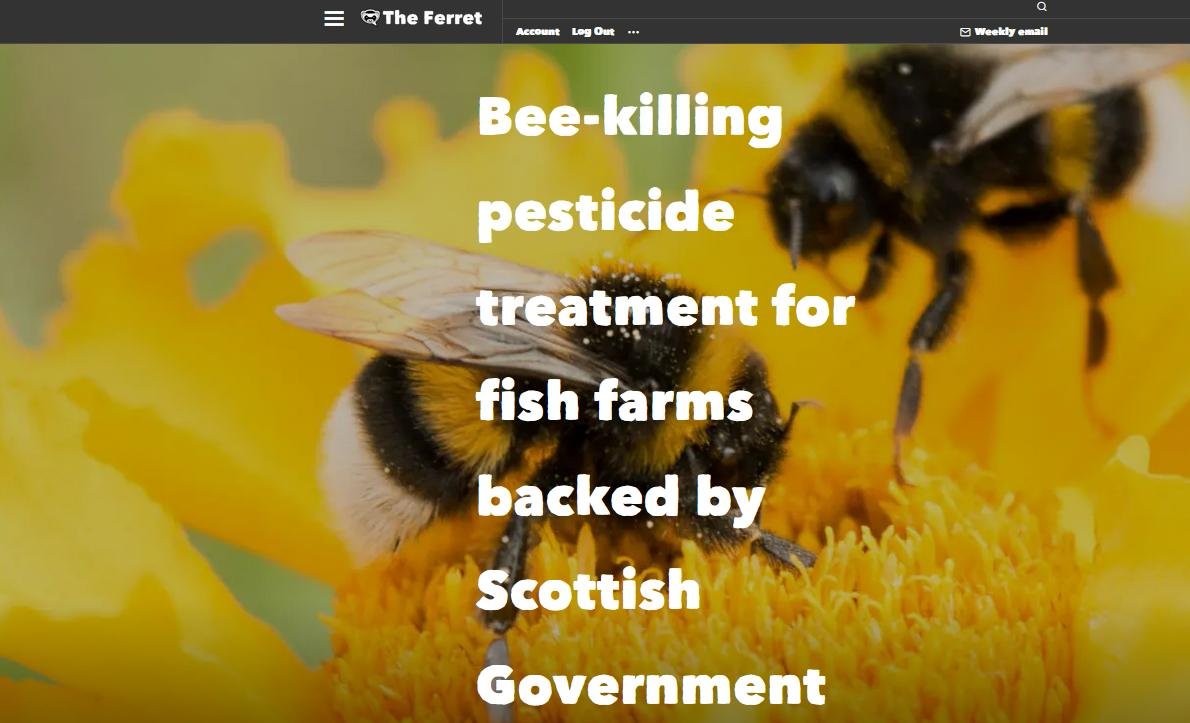
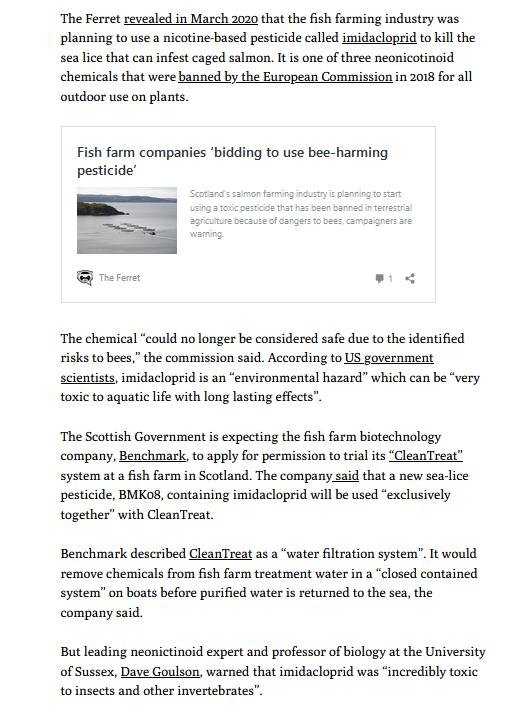
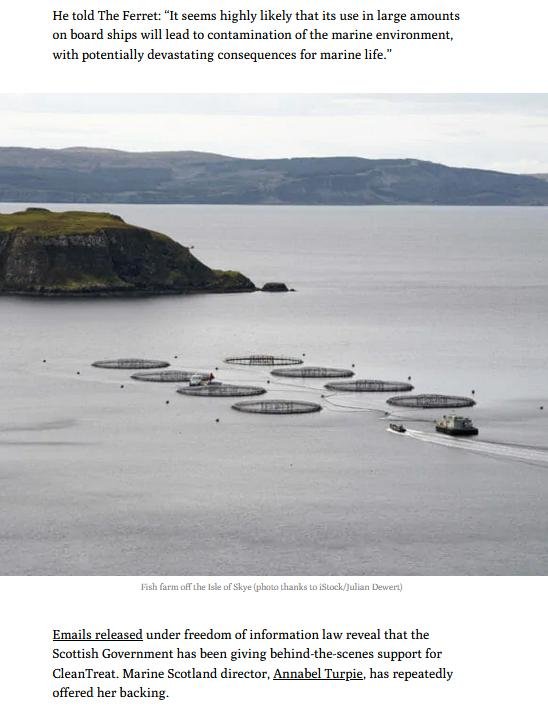
"This is the antithesis of the precautionary principle & smacks of @GreenerScotland putting commercial gain ahead of environmental protection. Surely the public has a right to know before the floodgates are opened to a banned neonicotinoid?” @FerretScot https://t.co/lBv6qqEIo2
— Don Staniford (@TheGAAIA) May 21, 2021
In May 2020, Scottish Salmon Watch revealed that Mowi (the world's largest salmon farming company) had lobbied the Scottish Environment Protection Agency to support a field trial of Ectosan (Imidacloprid) in Loch Ailort near Fort William – prompting the Scottish Greens to express their "deep concern" in a letter to Scotland's Environment Minister.
Scottish Greens "deeply concerned" at Mowi's field trial of Neonicotinoid @markruskell @strathearnrose @scotgp @FergusEwingMSP @SP_ECCLR @ScottishEPA "Imidacloprid has been classed as an environmental hazard" @WeAreBenchmark @MowiScotlandLtd @vmdgovuk https://t.co/KTgbs4GnNM pic.twitter.com/ESCXnu1TOM
— Don Staniford (@TheGAAIA) May 21, 2020
Secret Trials: 'Royal' Salmon Doused with Bee-Killing Insecticide Imidacloprid? https://t.co/S1ovGqCpu7 FOI reveals proposed 'field trial' of toxic neonicotinoid @MowiScotlandLtd at Ardnish in Loch Ailort @ScottishEPA @WeAreBenchmark @marinescotland @FerdOwner @vmdgovuk #BMK08 pic.twitter.com/iUl9lk7XPv
— Don Staniford (@TheGAAIA) May 20, 2020
Scottish Salmon Watch revealed earlier this month (17 June 2021) that clinical trials of D-10 Aquatic Blast (Imidacloprid) had been taking place in Norway since 2017 with field trials of BMK08 (Imidacloprid) also taking place at at least five salmon farms involving 35,000 tonnes of fish in 2018/2019.
Which salmon farms in Norway are being permitted by @fiskeridir to use the banned neonicotinoid Imidacloprid (D-10 Aquatic Blast)? https://t.co/sojgslu2Wk @seafoodnorway @UK_NSC @NFdep @fiskeribladet @IntraFishNorge @WeAreBenchmark @FerdOwner @NorwaySeafoodUS@Fiskeoppdrett pic.twitter.com/gO4Ge4JDZw
— Don Staniford (@TheGAAIA) June 23, 2021
The Norwegian Food Safety Agency @InfoMattilsynet knew in April 2019 that Ectosan (re-named BMK08) was the banned neonicotinoid Imidacloprid @WeAreBenchmark @FerdOwner @HansBrattskar @NFdep @fiskeridir @miljodir @Legemiddelinfo
How much Norwegian salmon has been embalmed? pic.twitter.com/LQcy6FkAKk— Don Staniford (@TheGAAIA) June 25, 2021
Scottish Salmon Watch revealed last week (25 June 2021) that Environment Canada was considering a trial in Canada in 2019.
Has the banned neonicotinoid Imidacloprid (marketed as D-10 Aquatic Blast, Ectosan & BMK08) been secretly trialled on salmon farms in Canada? @environmentca @GovCanHealth @EcologyAction @CermaqCan
@MowiCanadaWest @cookeseafood @cc_nb
@ByondPesticides https://t.co/UlI7QHPe0w pic.twitter.com/2biCyeaCxe— Don Staniford (@TheGAAIA) June 25, 2021
The Veterinary Record reported in May 2021:
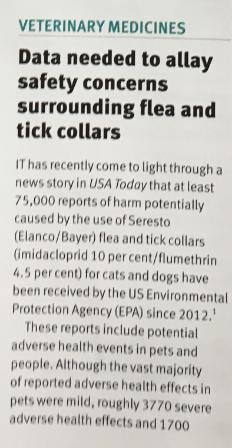
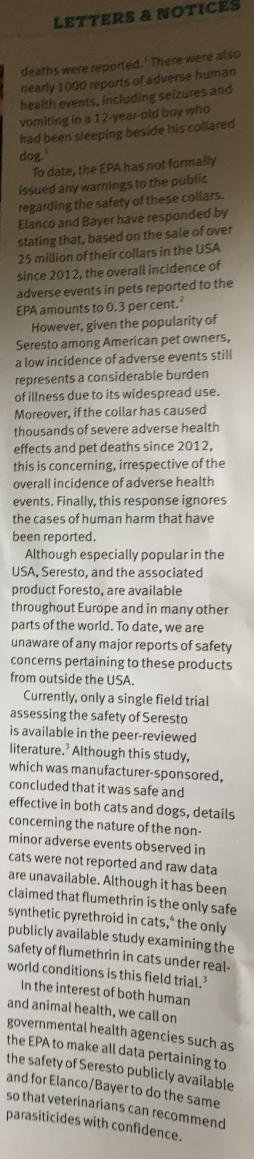
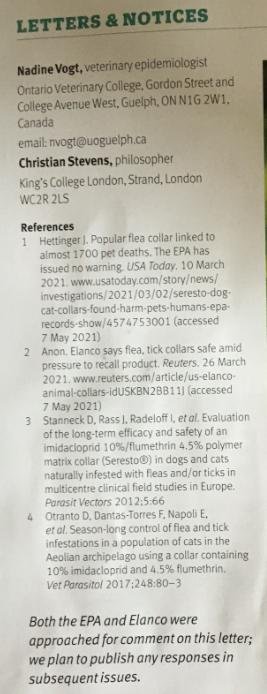
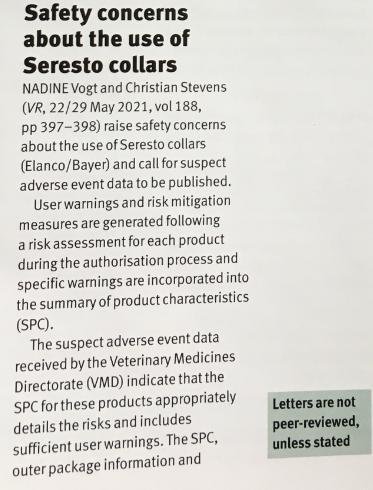
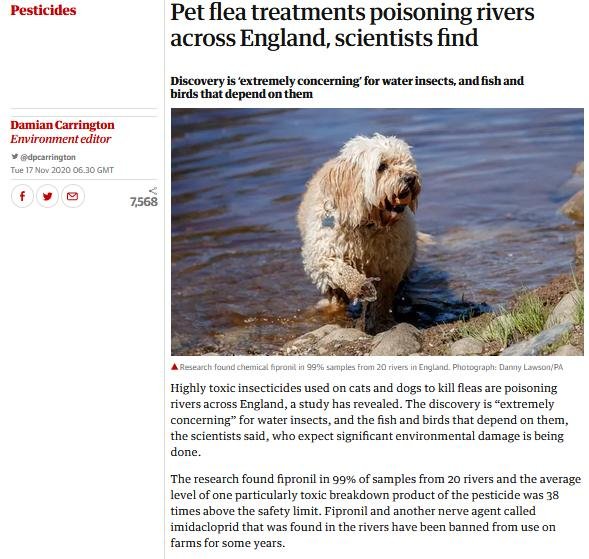
The Guardian reported (17 November 2020):
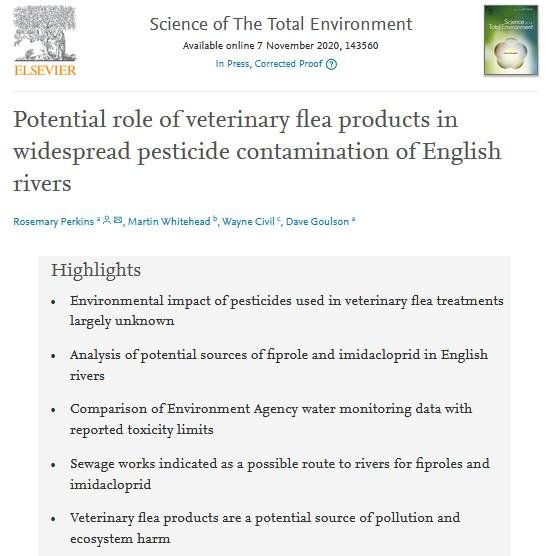
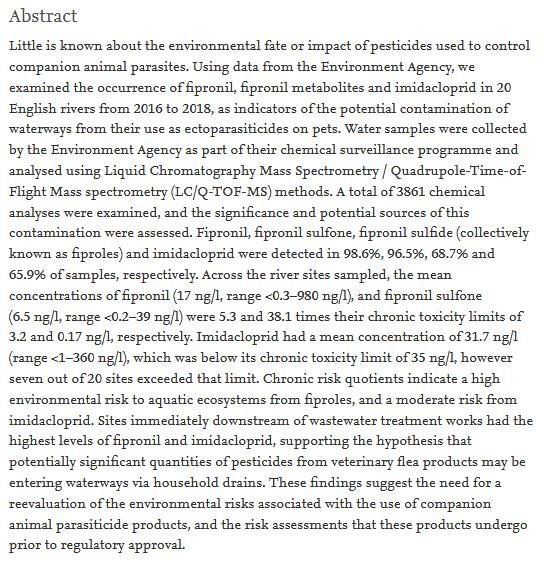
Science of the Total Environment reported (7 November 2020):

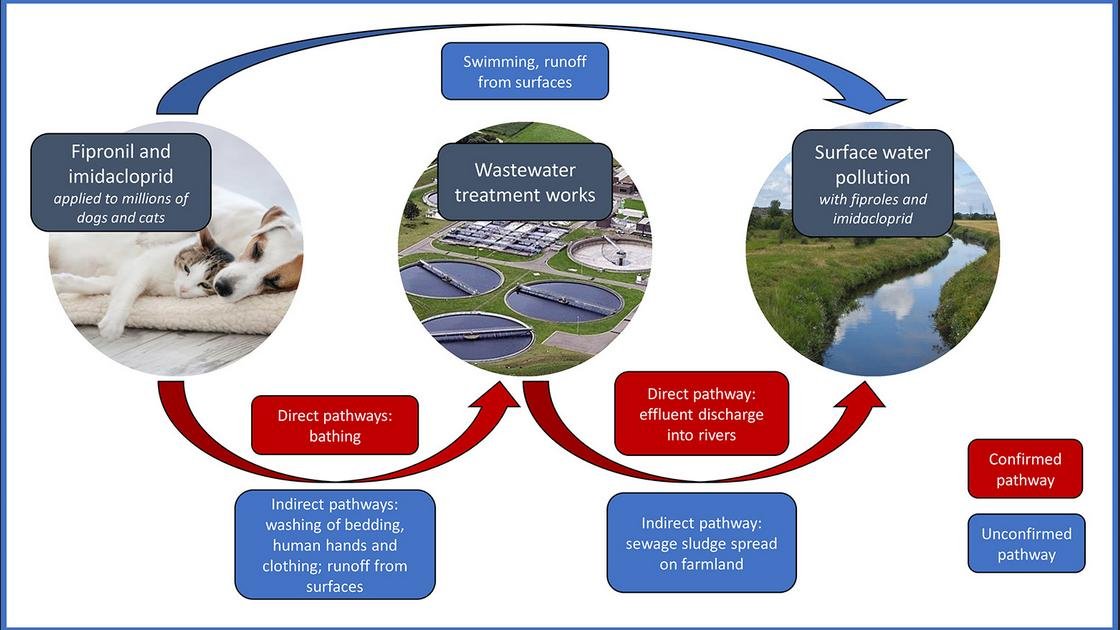
That's the same chemical used to prevent ticks where the manufacturers advise that dogs should not enter water after treatment?!
— Dom Greves (@domgreves) June 8, 2020
The Daily Mail reported (17 November 2020):
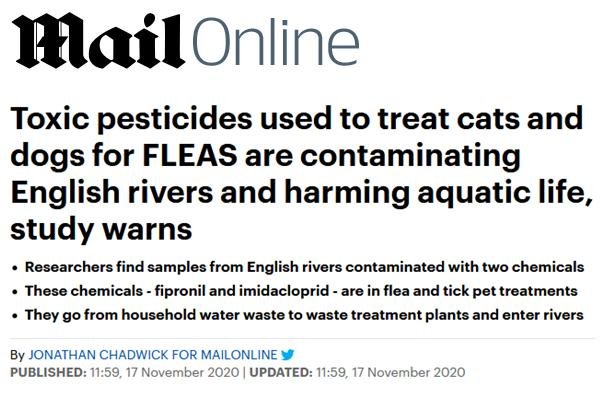
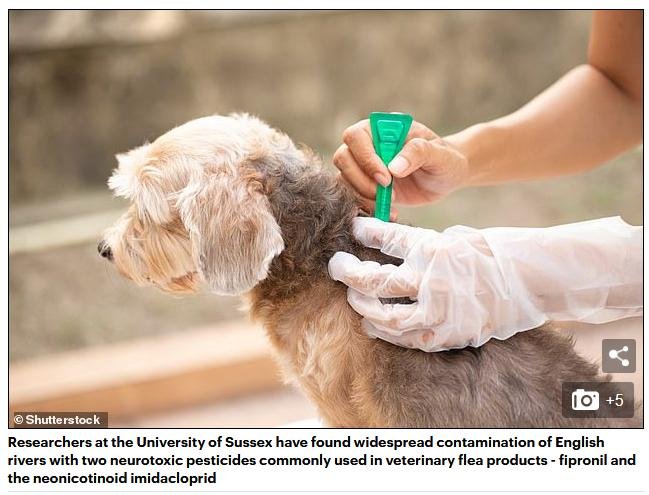
Neonicotinoid use in Scottish salmon going to the dogs? https://t.co/Ts1xPOrpAl
New science shows that Imidacloprid – used on pets to kill fleas – is poisoning rivers @DaveGoulson @roseofgoodhope
How can you justify use in salmon farming? @WeAreBenchmark @MowiScotlandLtd pic.twitter.com/xNXZUIgm1W— Don Staniford (@TheGAAIA) November 19, 2020
Meanwhile, Norwegian-owned Benchmark continues with their dogged pursuit of approval for Imidacloprid in salmon farming.
Meet the toxic team behind the use of the banned neonicotinoid Imidacloprid in Scottish salmon pharming! https://t.co/AvF9wXoiNh @WeAreBenchmark @FerdOwner @marinescotland @ScottishEPA @MairiMcAllan @MairiGougeon @GreenerScotland #Imidacloprid #BMK08 #Neonicotinoid #SEPA #Toxic pic.twitter.com/pH4c2aAZre
— Don Staniford (@TheGAAIA) May 21, 2021
In an interview with the Norwegian financial newspaper Dagens Naringsliv earlier this month, Benchmark once again failed to tell investors that BMK08 was the banned toxic neonicotinoid Imidacloprid.
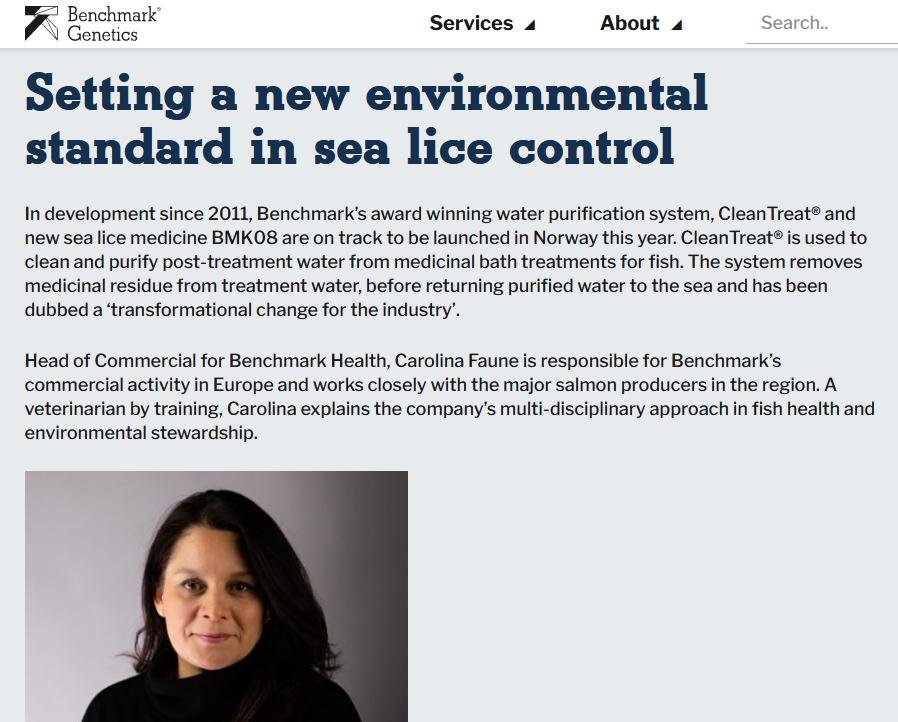
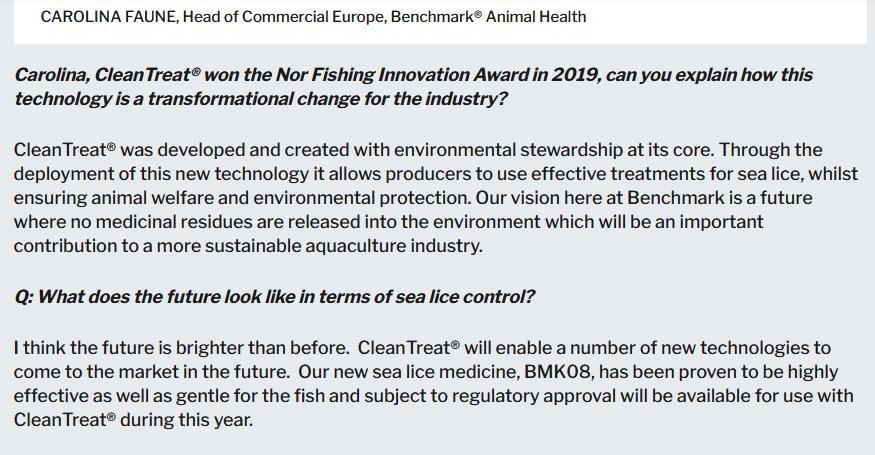
"Benchmark’s award winning water purification system, CleanTreat & new sea lice medicine BMK08 are on track to be launched in Norway this year" https://t.co/pZdPGe2oAS
When will @WeAreBenchmark come clean & tell investors BMK08 is the banned neonicotinoid Imidacloprid? @NFdep— Don Staniford (@TheGAAIA) June 21, 2021
Meet 'Ethics Man' (tobacco billionaire Johan Andresen), Chair of Norway's Council on Ethics which polices 'ethical' investment @FerdOwner @Folketrygdfond https://t.co/4P1m3g2CvT
He is a shareholder in salmon farming companies & via @WeAreBenchmark wants to use neonicotinoids! pic.twitter.com/yDq7CeSDvu— Don Staniford (@TheGAAIA) November 30, 2020
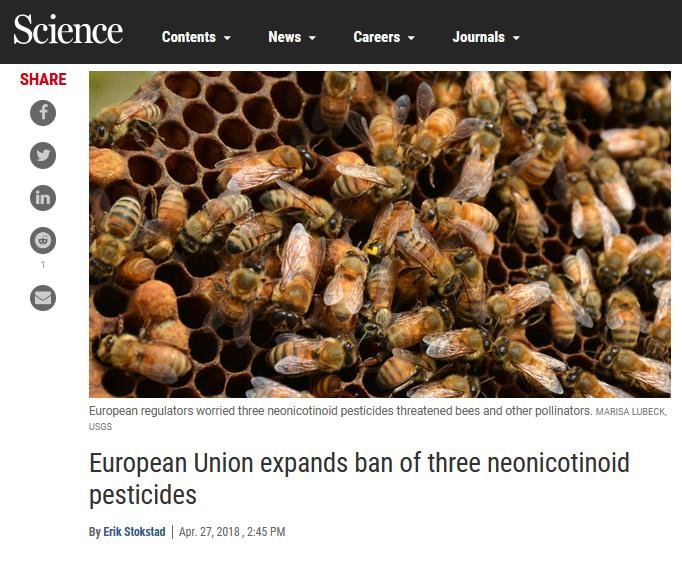
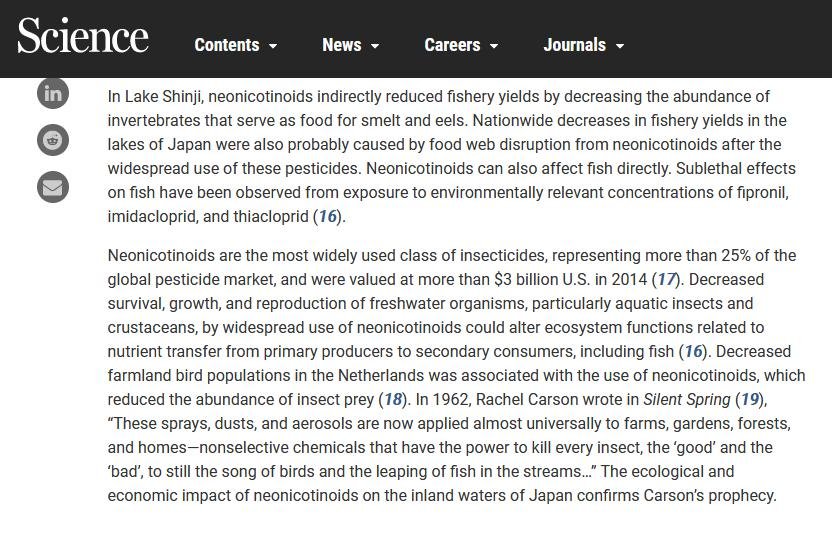
Given the bad press for neonicotinoids it is hardly surprising that Benchmark are blowing smoke on BMK08 (previously known as Ectosan). Informing investors that their "new sea lice medicine" – which Benchmark claimed in November 2019 has 'zero environmental impact' – is actually a banned neonicotinoid would hardly be good for business. Science reported in April 2018:

National Geographic reported in November 2019:

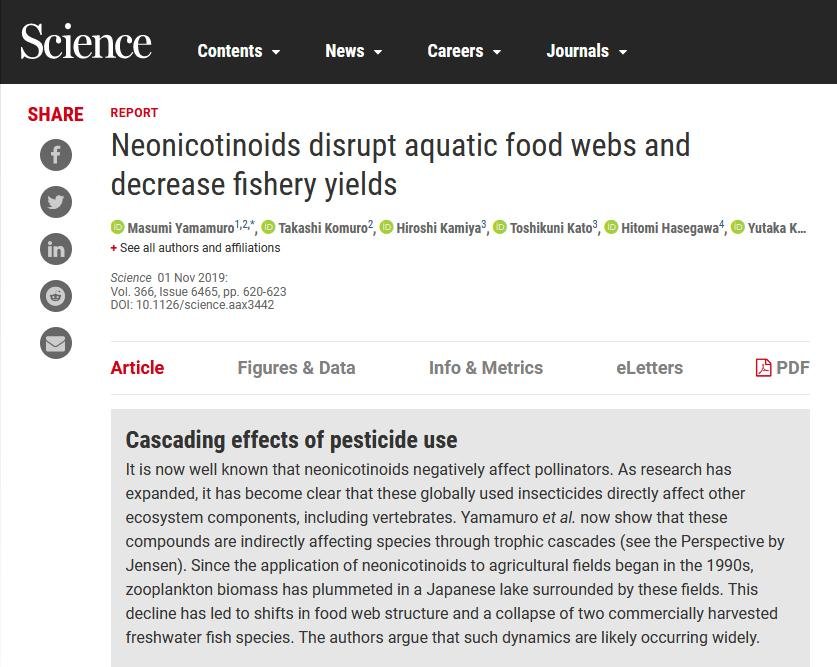
Science reported in November 2019:
Benchmark's silence on Imidacloprid – which they secretly developed back in 2011 – certainly speaks volumes.
"It's the tasty one," said a cigarette ad for Tiedemanns Tobaksfabrik (biggest tobacco company in Norway) @FerdOwner https://t.co/Pv7Npg9mWB "Setting a new standard in environmental care for sea lice bath treatments," claims CleanTreat @WeAreBenchmark #BlowingSmoke #Imidacloprid pic.twitter.com/SE0xCB38FC
— Don Staniford (@TheGAAIA) March 19, 2020
Meanwhile the science detailing significant environmental impacts of Imidacloprid in aquatic ecosystems says it all. Hakai magazine reported in May 2020:
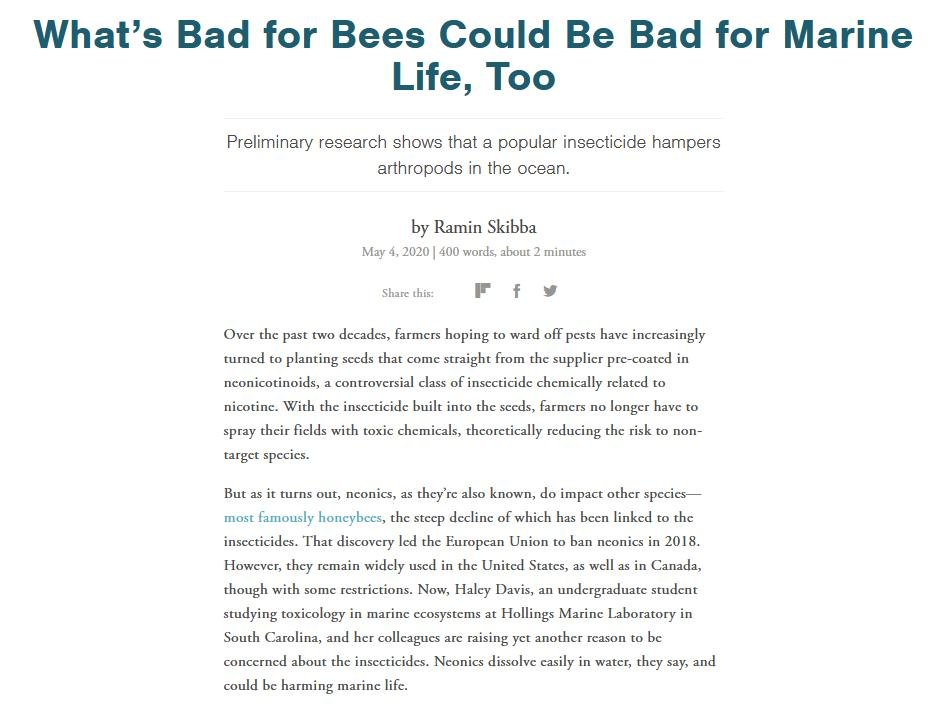
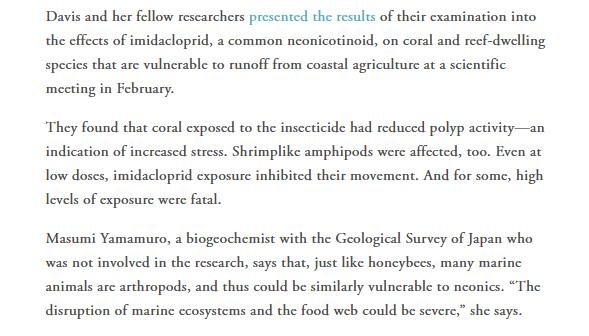
Scottish Salmon Watch summarized the scientific evidence against the use of Imidacloprid in June 2020.
Scientific References:
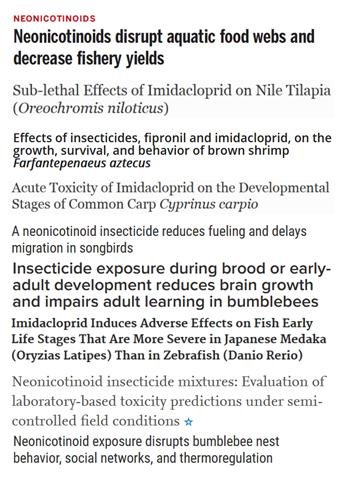
The new aspects of using some safe feed additives on alleviated imidacloprid toxicity in farmed fish: a review. Reviews in Aquaculture, April 2020
Insecticide exposure during brood or early-adult development reduces brain growth and impairs adult learning in bumblebees. Proceedings of the Royal Society B, March 2020
Coral Reef Organisms: Differential Sensitivities to an Agricultural Pesticide. Ocean Sciences, February 2020
Environmental pollution from pet parasiticides. Veterinary Record, January 2020
Sub-lethal Effects of Imidacloprid on Nile Tilapia (Oreochromis niloticus). Water, Soil & Air Pollution, January 2020
The effect of air exposure, handling stress and imidacloprid on the susceptibility of Crassostrea gigas to ostreid herpesvirus 1 (OsHV-1). Aquaculture Environment Interactions, December 2019
Neonicotinoids disrupt aquatic food webs and decrease fishery yields. Science, November 2019
Effects of insecticides, fipronil and imidacloprid, on the growth, survival, and behavior of brown shrimp Farfantepenaeus aztecus. PLoS One, October 2019
Acute Toxicity of Imidacloprid on the Developmental Stages of Common Carp Cyprinus carpio. Toxicology & Environmental Health Sciences, October 2019
A neonicotinoid insecticide reduces fueling and delays migration in songbirds. Science, September 2019
Imidacloprid Induces Adverse Effects on Fish Early Life Stages That Are More Severe in Japanese Medaka (Oryzias Latipes) Than in Zebrafish (Danio Rerio). Chemosphere, June 2019
Trends in Neonicotinoid Pesticide Residues in Food and Water in the United States, 1999-2015. Environmental Health, January 2019
Neonicotinoid insecticide mixtures: Evaluation of laboratory-based toxicity predictions under semi-controlled field conditions. Environmental Pollution, December 2018
Neonicotinoid exposure disrupts bumblebee nest behavior, social networks, and thermoregulation. Science, November 2018
Were the sharp declines of dragonfly populations in the 1990s in Japan caused by fipronil and imidacloprid? An analysis of Hill’s causality for the case of Sympetrum frequens. Environmental Science & Pollution Research, October 2018
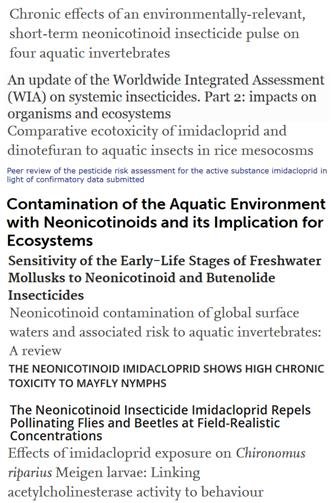
Chronic effects of an environmentally-relevant, short-term neonicotinoid insecticide pulse on four aquatic invertebrates. Science of the Total Environment, October 2018
Imidacloprid Poisoning: An Emerging Cause of Potentially Fatal Poisoning. Indian Journal of Critical Care Medicine, November 2017
An update of the Worldwide Integrated Assessment (WIA) on systemic insecticides. Part 2: impacts on organisms and ecosystems. Environmental Science & Pollution Research, November 2017
Neonicotinoids act like endocrine disrupting chemicals in newly-emerged bees and winter bees. Scientific Reports, September 2017
Comparative ecotoxicity of imidacloprid and dinotefuran to aquatic insects in rice mesocosms. Ecotoxicology & Environmental Safety, April 2017
Peer review of the pesticide risk assessment for the active substance imidacloprid in light of confirmatory data submitted. European Food Safety Authority, November 2016
Contamination of the Aquatic Environment with Neonicotinoids and its Implication for Ecosystems. Frontiers in Environmental Science, November 2016
Sensitivity of the Early-Life Stages of Freshwater Mollusks to Neonicotinoid and Butenolide Insecticides. Environmental Pollution, November 2016
A Screening of Multiple Classes of Pharmaceutical Compounds for Effect on Preadult Salmon Lice Lepeophtheirus Salmonis. Journal of Fish Diseases, October 2016
Neonicotinoid contamination of global surface waters and associated risk to aquatic invertebrates: A review. Environment International, January 2015
Effects of neonicotinoids and fipronil on non-target invertebrates. Environmental Science & Pollution Research, September 2014
Environmental fate and exposure; neonicotinoids and fipronil. Environmental Science & Pollution Research, August 2014
Systemic pesticide concerns extend beyond the bees. Current Biology, August 2014
Risks of large-scale use of systemic insecticides to ecosystem functioning and services. Environmental Science & Pollution Research, July 2014
A review of the direct and indirect effects of neonicotinoids and fipronil on vertebrate wildlife. Environmental Science & Pollution Research, June 2014
An overview of the environmental risks posed by neonicotinoid insecticides. Journal of Applied Ecology, June 2013
Macro-Invertebrate Decline in Surface Water Polluted with Imidacloprid. PLoS One, May 2013
The neonicotinoid imidacloprid shows high chronic toxicity to mayfly nymphs. Environmental Toxicology & Chemistry, February 2013
The Neonicotinoid Insecticide Imidacloprid Repels Pollinating Flies and Beetles at Field-Realistic Concentrations. PLoS One, January 2013
Exposure to multiple cholinergic pesticides impairs olfactory learning and memory in honeybees. Journal of Experimental Biology, 2013
Cumulative ecological impacts of two successive annual treatments of imidacloprid and fipronil on aquatic communities of paddy mesocosms. Ecotoxicology & Environmental Safety, June 2012
Effects of imidacloprid exposure on Chironomus riparius Meigen larvae: Linking acetylcholinesterase activity to behaviour. Ecotoxicology & Environmental Safety, July 2011
Behaviour and Growth of Chironomus riparius Meigen (Diptera: Chironomidae) under Imidacloprid Pulse and Constant Exposure Scenarios. Water, Air, & Soil Pollution, December 2010
Hazard identification of imidacloprid to aquatic environment. Chemosphere, August 2009
Acute Human Self-Poisoning With Imidacloprid Compound: A Neonicotinoid Insecticide. PloS One, April 2009
Fatal Intoxication With Imidacloprid Insecticide. American Journal of Emergency Medicine, June 2008
Acute and Chronic Toxicity of Imidacloprid to the Aquatic Invertebrates Chironomus tentans and Hyalella azteca under Constant- and Pulse-Exposure Conditions. Archives of Environmental Contamination & Toxicology, January 2008
Comparative toxicity of imidacloprid, of its commercial liquid formulation and of diazinon to a non-target arthropod, the microcrustacean Daphnia magna. Chemosphere, July 2007
Acute toxicity of imidacloprid and fipronil to a nontarget aquatic insect, Simulium vittatum Zetterstedt cytospecies IS-7. Bulletin of Environmental Contamination & Toxicology, May 2005
"Imidacloprid has been banned from use by farmers because of the widespread environmental harm it caused" @DaveGoulson "It would be the height of foolishness to start using this potent, broad-spectrum neurotoxin in salmon farming" https://t.co/nqV1mv7CAY @WeAreBenchmark pic.twitter.com/8V15mLltzr
— Don Staniford (@TheGAAIA) June 8, 2020
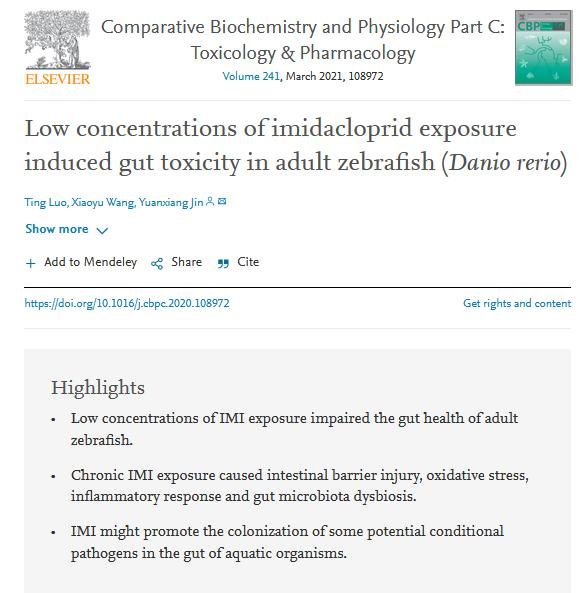
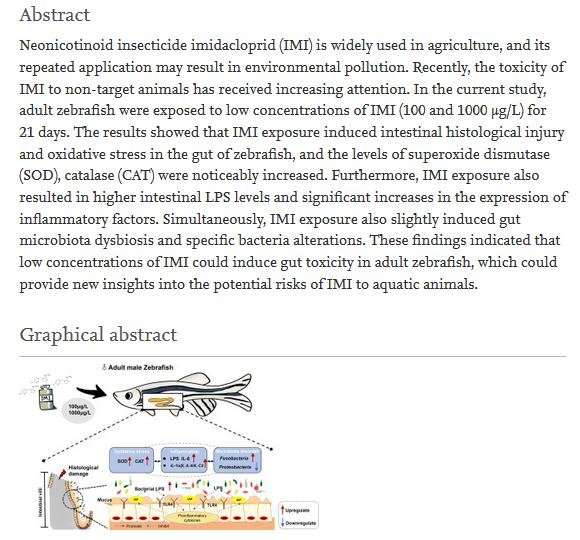
The weight of scientific evidence against Imidacloprid keeps on building – whether it is in relation to the impact on fish as this scientific paper published in March 2021 reports.
Or the impact on shellfish as this scientific paper published in August 2020 reports.
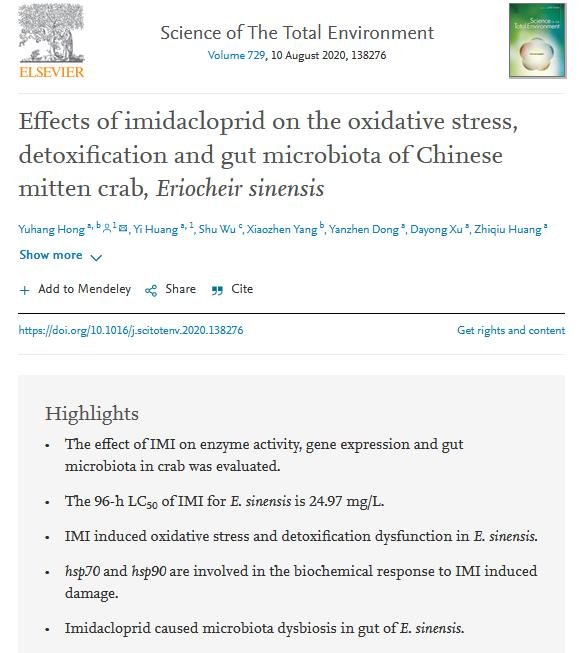
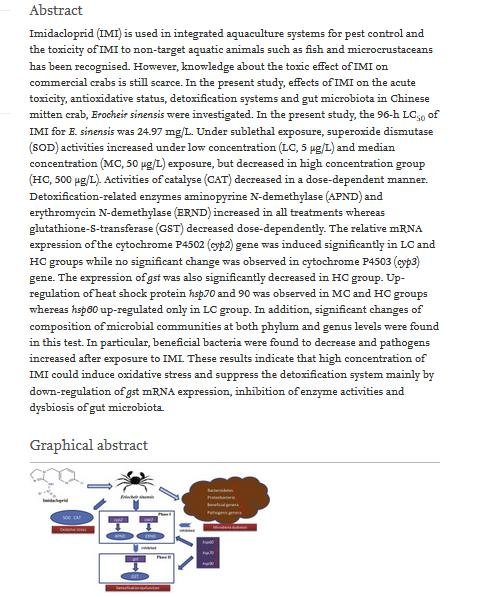
And this scientific paper published in November 2020.
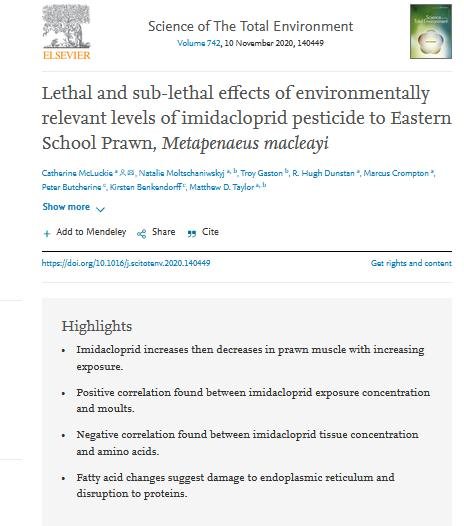
And another scientific paper published in November 2020.
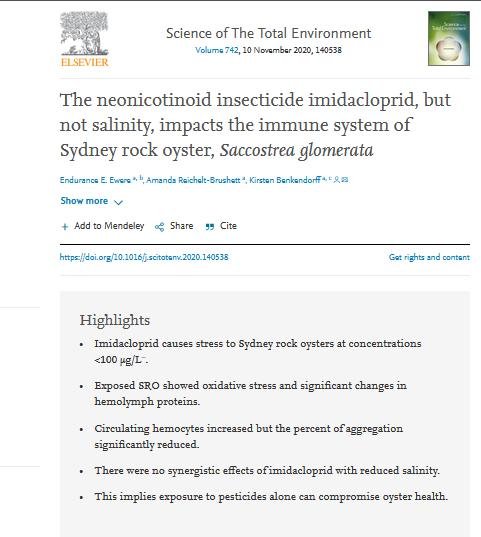
Scientific research published in September 2020 reported the impact of Imidacloprid on flies.
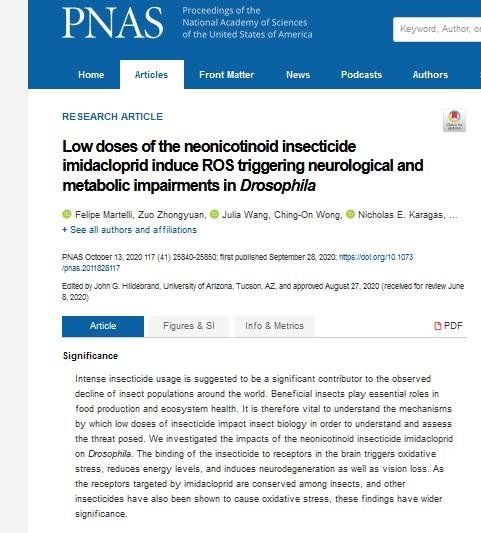
It is hard to escape the conclusion that Benchmark's claim that the use of BMK08 (Imidacloprid) in salmon farming is to "the highest environmental and welfare credentials available" is complete and utter bullshit.

Thankfully, the European Parliament agreed earlier this month that the use of Imidacloprid in salmon farming should be resolutely opposed.
Breaking News: Victory in Europe – @Europarl_EN votes against the use of the toxic neonicotinoid Imidacloprid in farmed salmon! @GraceOSllvn @europeangreens https://t.co/GuPl3tj62S
Benchmark’s BMK08 (Imidacloprid) is dead in the water in Europe! @WeAreBenchmark @FerdOwner pic.twitter.com/s3lZtrCKrw— Don Staniford (@TheGAAIA) June 10, 2021
Hopefully, the use of Imidacloprid in salmon farming is now dead in the water – at least in Europe.
Anti-salmon farming activist Don Staniford said the EU’s opposition to imidacloprid “effectively kills any use of BMK08 by companies such as Mowi in Scotland as Europe is such a key market for Scottish salmon” @salmonfarming1 @WeAreBenchmark @FerdOwner https://t.co/VFynHTLqY1
— Don Staniford (@TheGAAIA) June 10, 2021
Center for Biological Diversity reported in April that pet collars containing Imidacloprid are subject to a legal petition following the deaths of 1,700 pets – how many fish will be killed by the use of BMK08/Ectosan/D-10 Aquatic Blast in salmon farming? https://t.co/YFrjjN4Dl4 pic.twitter.com/iQl1HRkWFr
— Don Staniford (@TheGAAIA) June 29, 2021
Read more via:
- Canadian field trials of the banned neonicotinoid Imidacloprid on salmon farms?
- Norwegian Environment Agency FOI reply lifts lid on banned neonicotinoid Imidacloprid
- Interferencia: "Salmon Farming – Norwegian company seeks to commercialize in Chile a pesticide banned by the EU for being 'very toxic' to aquatic life"
- Anyone for Norwegian Salmon Marinaded in the Banned Neonicotinoid Imidacloprid (don't worry it's ASC-approved)?!
- "EU deals potential setback to Benchmark’s rollout of new sea lice treatment"
- Fish Farmer: "MEPs condemn new lice treatment: who's right" "
- "EU setback for novel lice treatment"
- Breaking News: Victory in Europe – Parliament votes against the use of the toxic neonicotinoid Imidacloprid in farmed salmon!
- Fish Farming Expert: "Novel lice treatment threatened by European Parliament vote"
- Wave of European Opposition to Benchmark's Imidacloprid (BMK08) – the tide turns against neonicotinoids in salmon pharming!
- European Opposition to Neonicotinoid Contamination of Farmed Salmon – is BMK08 (Imidacloprid) dead in the water?
- The Guardian: "‘Novichok for insects’ may be approved for Scottish fish farms"
- Who are the toxic team lurking behind Benchmark's BMK08 (Imidacloprid) in Scottish salmon pharming?
- The Ferret: "Bee-killing pesticide treatment for fish farms backed by Scottish Government"
- Cleaning Tox-Sick Scottish Salmon – Benchmark's magic trick making the banned neonicotinoid Imidacloprid disappear!
- Rumsfeldian Fish Philosophy – Things We Know We Know, Things We Now Know We Don't Know & Things We Don't Know We Don't Know About 'Scottish' Salmon!
- SEPA ordered by Commissioner to Disclose 'Commercially Confidential' Information on CleanTreat & BMK08 (Imidacloprid) by 7 June
- Warning: Neonicotinoid Imidacloprid Use in Salmon Farming "Clears Another Hurdle" With European MRL
- Warning: Imidacloprid Moves A Step Closer to Commercial Use in Salmon Farming
- Nasty Neonicotinoid Plagues Salmon Farming in 2021
- Toxic Neonicotinoid "Close to Commercial Launch" in Salmon Farming!
- New Science Dogs Approval of Neonicotinoid Imidacloprid for Scottish Salmon!
- Imidacloprid Use in Scottish Salmon Farming?
- Secret Salmon – On the Trail of Imidacloprid Use in Scotland!
- British Wildlife: "Neonics in Salmon Farming – Alarm Bells Are Ringing"
- Caveat Chile – toxic neonicotinoid Imidacloprid (BMK08) coming soon!
- Toxic Politics – Meet the Scottish Government's Minister for Sinister Chemicals
- Imidacloprid Licensed for Use by Mowi in Loch Ailort?
- Further Scientific Opposition to Imidacloprid Use in Salmon Farming
- Patent lifts lid on neonicotinoid use in salmon farming
- Horrible History: Imidacloprid Use in Salmon Farming
- Scientific Opposition to Neonicotinoid Use in Salmon Farming
- Backgrounder: "Imidacloprid – A Neonicotinoid Insecticide Toxic to Aquatic Life"
- BBC Farming Today on "Neonicotinoids in Salmon Farming"
- Sunday Times: "Outlawed insecticide may be used on Scottish salmon"
- FOI letter on Scientific Concerns re. Imidacloprid Use in Scottish Salmon Farming
- Scottish Greens "Deeply Concerned" at Mowi's Field Trial of Neonicotinoid Imidacloprid in Loch Ailort
- Letter to the Prince of Wales re. bee-killing Imidacloprid use at royal warrant holder Mowi
- Secret Trials: 'Royal' Salmon Doused with Bee-Killing Insecticide Imidacloprid?
- Follow the Salmoney – the Norwegian tobacco billionaire behind the Neonicotinoid Imidacloprid
- ENDS Report: "Calls for greater transparency over ‘toxic’ new fish farm product"
- Letter to SEPA: Please Come Clean on Imidacloprid!
- Letter to Scottish Ministers, SEPA & the VMD re. Imidacloprid
- FOI requests on Imidacloprid to SEPA, VMD & the Scottish Government
- Revealed: Toxic Neonicotinoid Insecticide Used to 'CleanTreat' Lousy Salmon
- Please Come Clean on BMK08!
- Sunday Times: "Official fears revealed over toxic threat of salmon trade"
- Cleaning Tox-Sick Scottish Salmon
- CleanTreat FOI Disclosures by the Scottish Government to Scottish Salmon Watch
- Media Backgrounder: Chemically Embalmed Scottish Salmon
- All is Not Well With Sick Scottish Salmon
FOI reveals Environment Canada knew Ectosan (BMK08) was the banned neonicotinoid in May 2019 but @WeAreBenchmark were "not willing to send the information on their technology" @environmentca @miljodir @Legemiddelinfo @NFdep @Folketrygdfond @GovCanHealth https://t.co/Jo2DOhVTD6 pic.twitter.com/sfO2CrOHEz
— Don Staniford (@TheGAAIA) June 25, 2021